
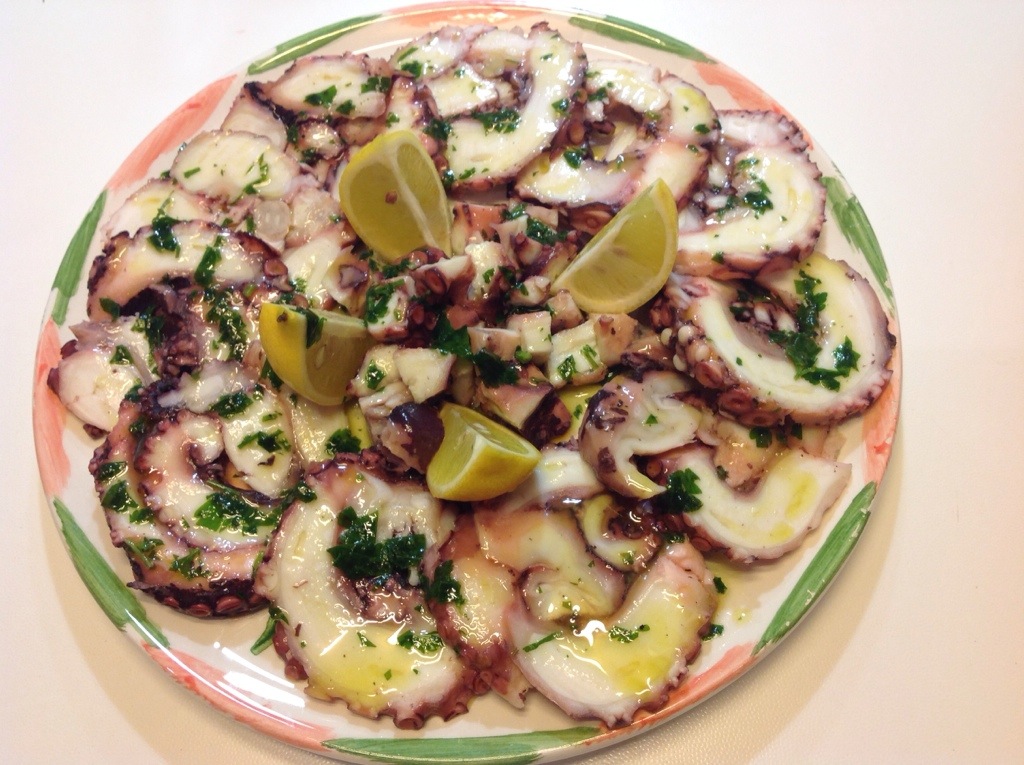
Octopus carpaccio, pressed in a bottle
Published on 11 January 2014
Favourites stay in this browser only. Sign in to save them to your account.
Selections and your current step are saved in this browser for this recipe.
Ingredients and method
The preparation remains in its original order; guided mode is not available for this structure.
Many people enjoy octopus but dislike seeing its tentacles. This is an enjoyable alternative way around that.
1 plastic bottle, 2 litres or 1.5 litres
String
Ingredients
1 octopus, about 1,200 g
1 carrot
1 celery stalk
Half an onion
Half a lemon
1 small piece chilli
Sage, rosemary, thyme and bay
Peppercorns
Juniper berries
1 garlic clove
Half a glass of water
Half a glass of white wine
Extra virgin olive oil
For the dressing
Extra virgin olive oil
Half a lemon
Parsley
Salt and pepper
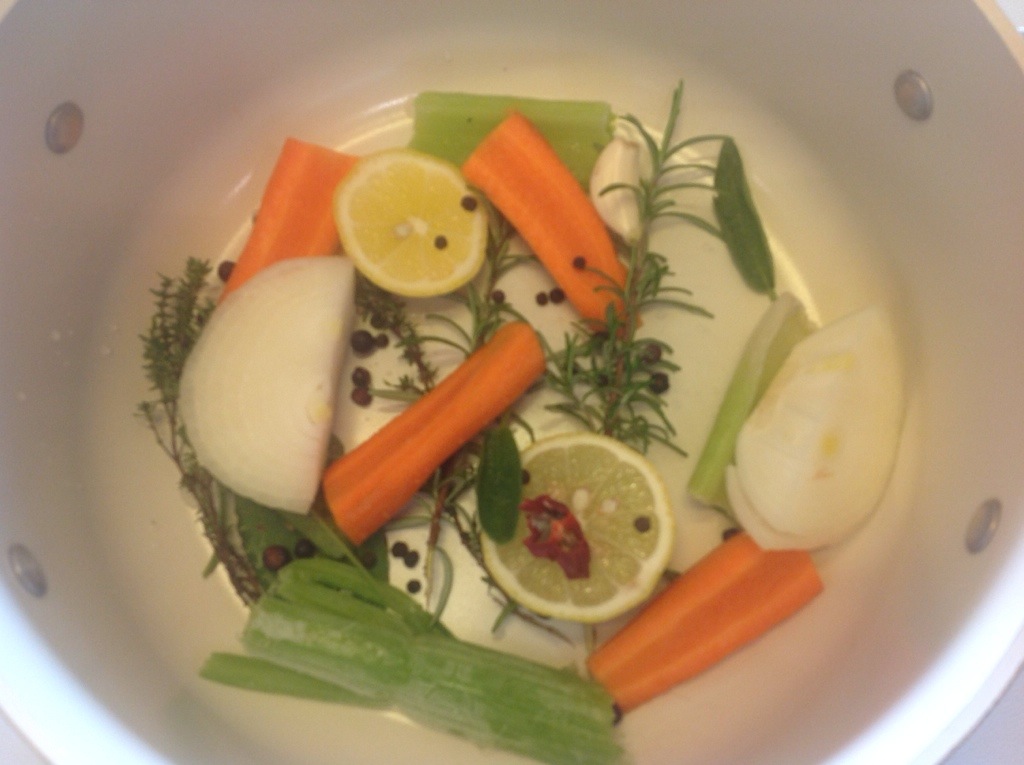
I put all the flavourings in a saucepan.

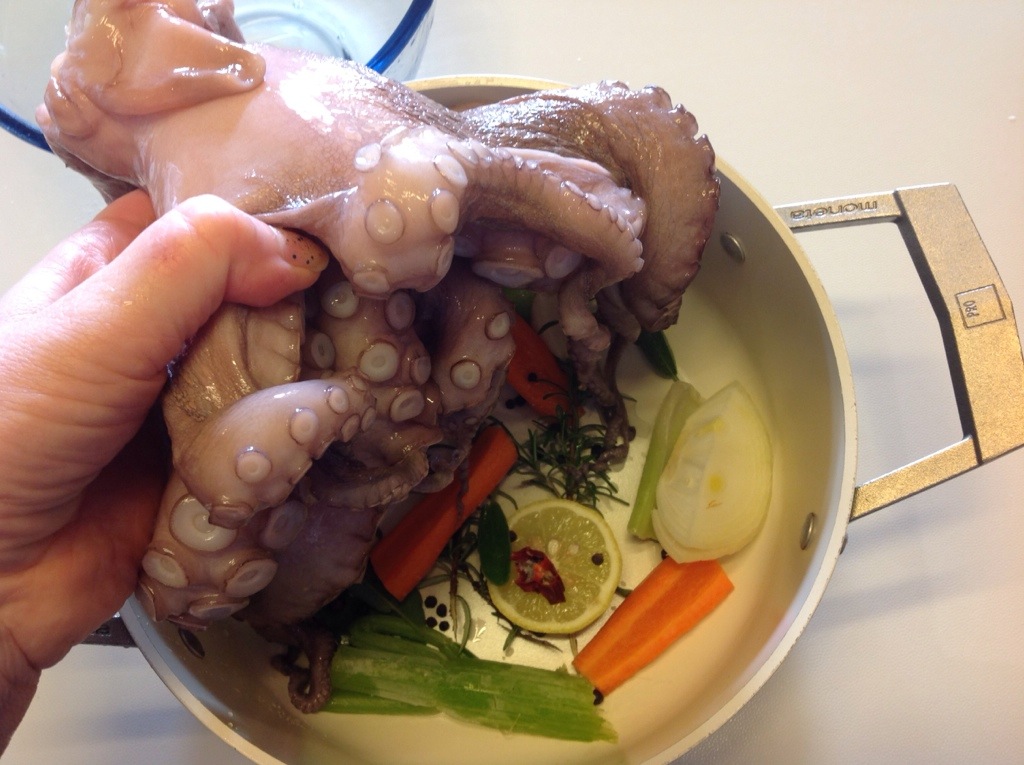
I wash the octopus thoroughly under cold water and remove its eye with a small knife.
I add it to the vegetables and flavourings without draining it too much.

I add a few tablespoons of oil, the water and white wine.

I cover and cook over the lowest heat for at least 50 minutes. I then uncover and pierce the octopus: if tender, turn off; otherwise, cook another 10 minutes.
I let it cool slightly.

Meanwhile, I take a plastic bottle with a straight, even base.

I cut off the upper part, where it normally narrows, to make a cup-like container.

I pierce the bottom with a pin or small nail.

I cut the octopus into pieces, separating the tentacles and cutting the head into 2 parts. Small pieces are unnecessary. Remove the fattier part if desired, but do not dry it: the liquid will act as the ‘glue’ holding it together.

I start putting the pieces into the bottle, pressing them firmly.

Once all are inside, I cover with cling film.

I take a small tin, or something with the same circumference as the bottle, and cover it with cling film.

I insert it into the bottle, pressing firmly to remove every gap. I place kitchen paper underneath because excess liquid and air escape through the holes.

I tie the two containers very tightly together with string to keep everything firmly compressed.
I refrigerate the assembled container. It is best made the day before: as it cools, the gelatine released by the octopus binds it.

The next day, or after at least 8 hours, I remove the string and tin, then cut away the plastic container with scissors.

The result is a very compact octopus roll. I place it on a board and slice with a very sharp knife.

I prefer slices that are not too thin, but you can use a meat slicer for carpaccio-thin slices if you wish.
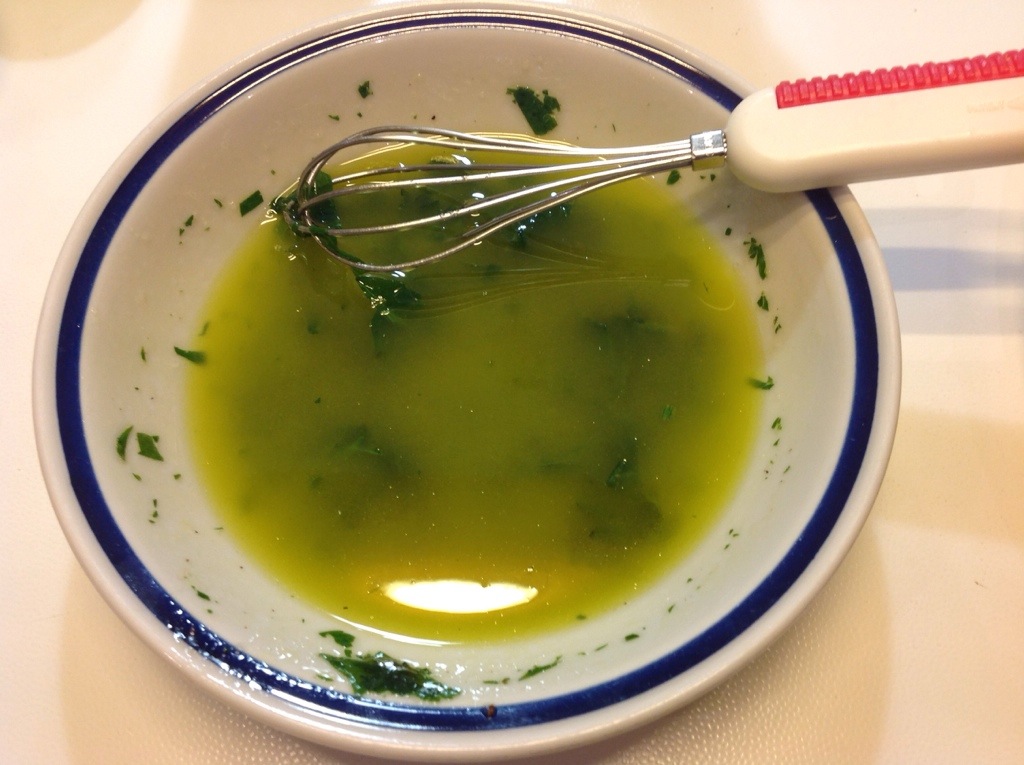
I emulsify lemon, oil, salt, pepper and parsley and dress everything.

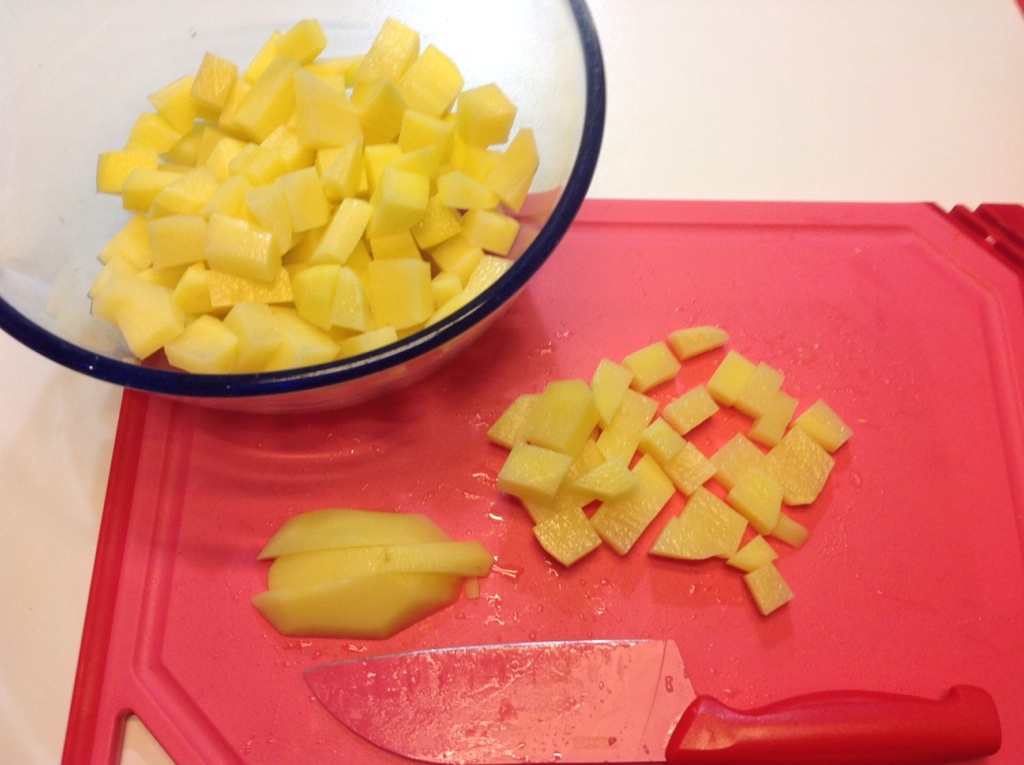
I also prepare boiled potatoes. To save time, I peel and dice them.

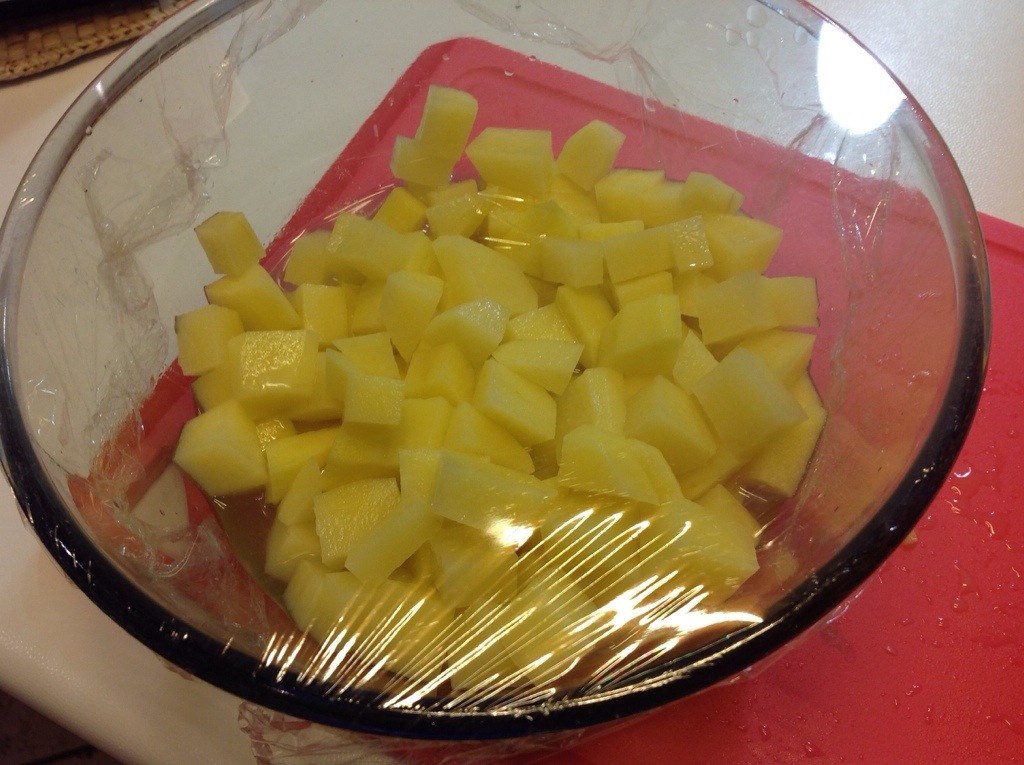
I add a couple of fingers’ depth of water, cover with pierced cling film and microwave at full power for 10 minutes.

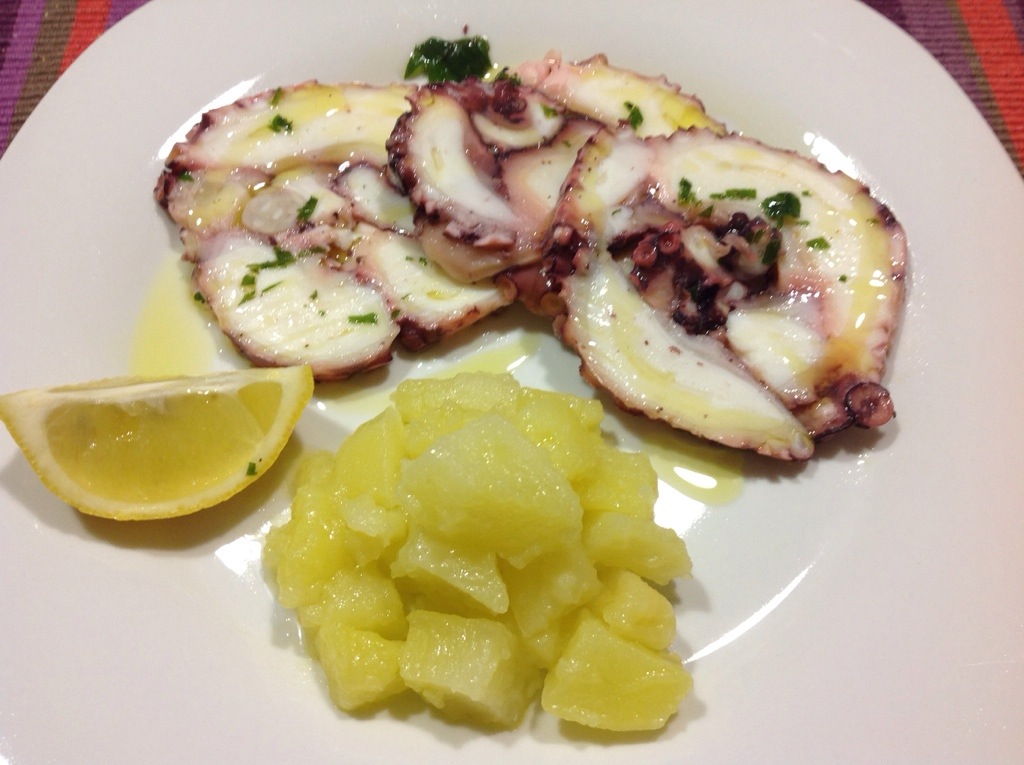
Done: an excellent starter, or a main course if you increase the quantity.

1 plastic bottle, 2 litres or 1.5 litres
String
Ingredients
1 octopus, about 1,200 g
1 carrot
1 celery stalk
Half an onion
Half a lemon
1 small piece chilli
Sage, rosemary, thyme and bay
Peppercorns
Juniper berries
1 garlic clove
Half a glass of water
Half a glass of white wine
Extra virgin olive oil
For the dressing
Extra virgin olive oil
Half a lemon
Parsley
Salt and pepper
I put all the flavourings in a saucepan.
I wash the octopus thoroughly under cold water and remove its eye with a small knife.
I add it to the vegetables and flavourings without draining it too much.
I add a few tablespoons of oil, the water and white wine.
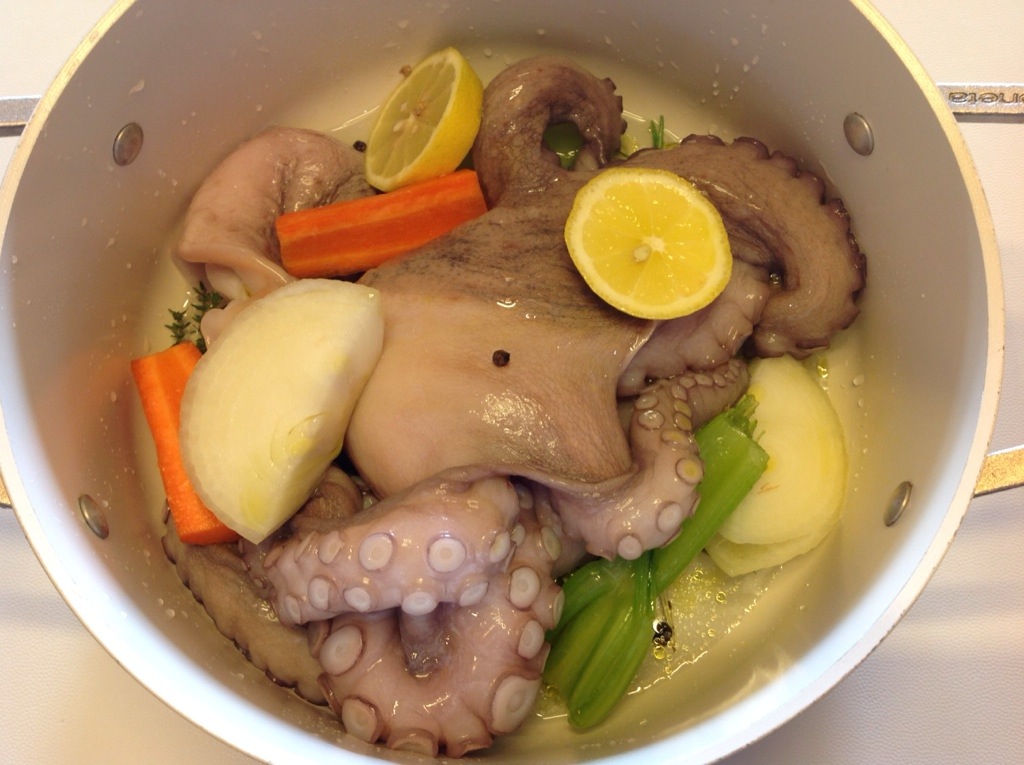
I cover and cook over the lowest heat for at least 50 minutes. I then uncover and pierce the octopus: if tender, turn off; otherwise, cook another 10 minutes.
I let it cool slightly.
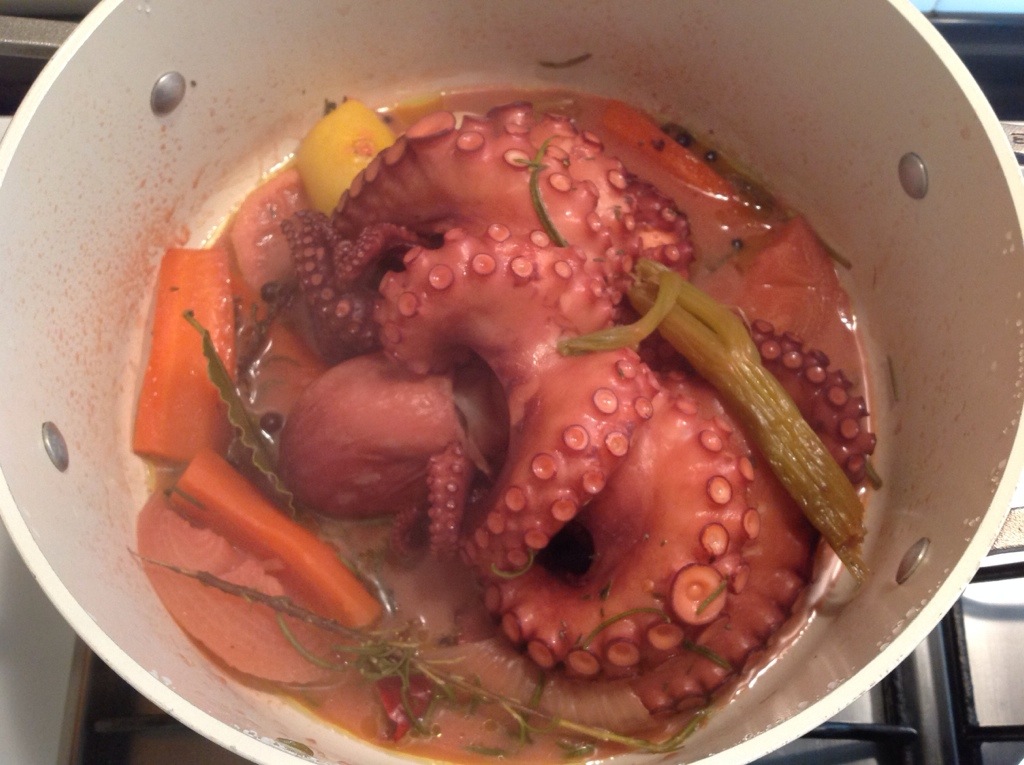
Meanwhile, I take a plastic bottle with a straight, even base.
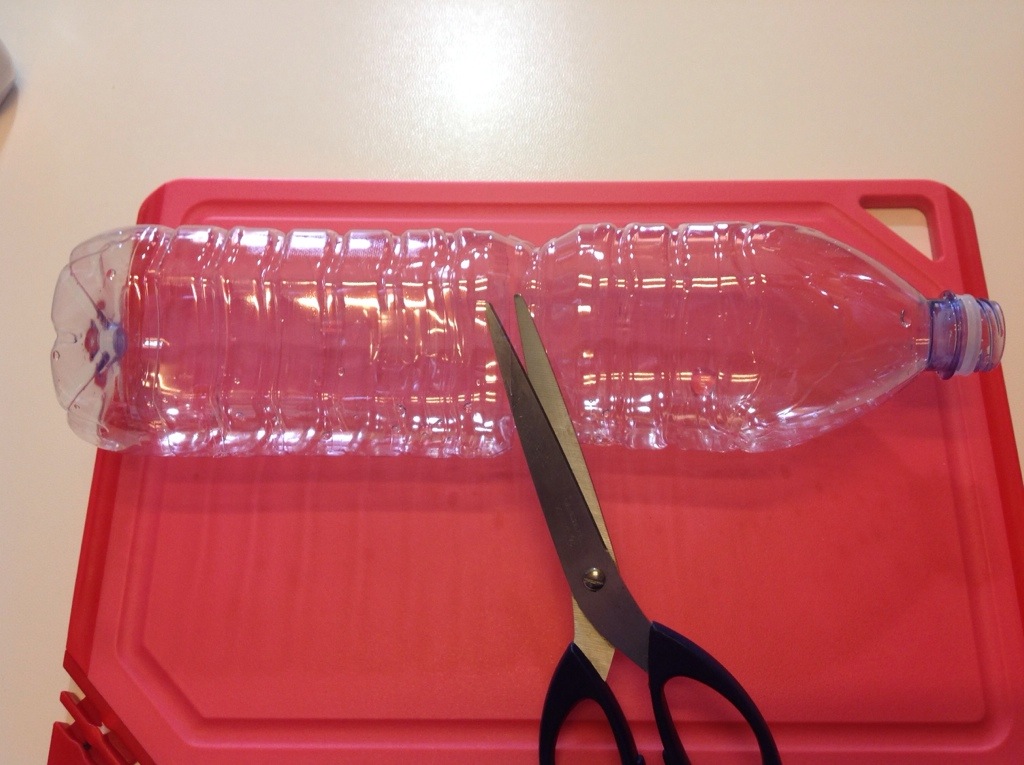
I cut off the upper part, where it normally narrows, to make a cup-like container.
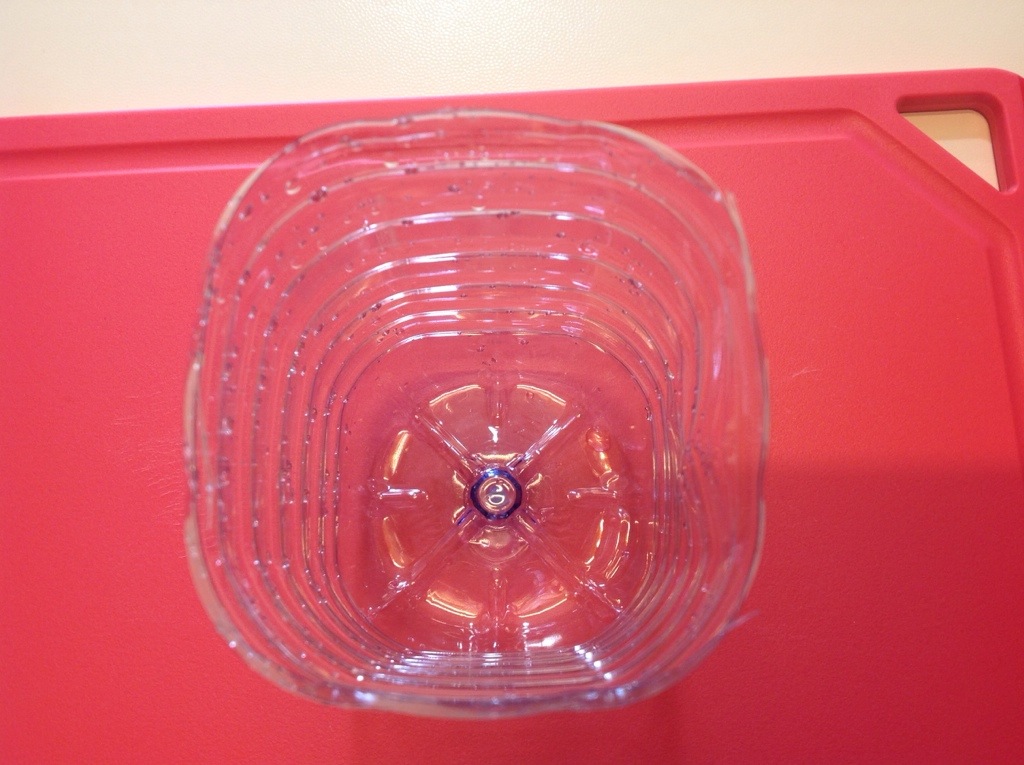
I pierce the bottom with a pin or small nail.
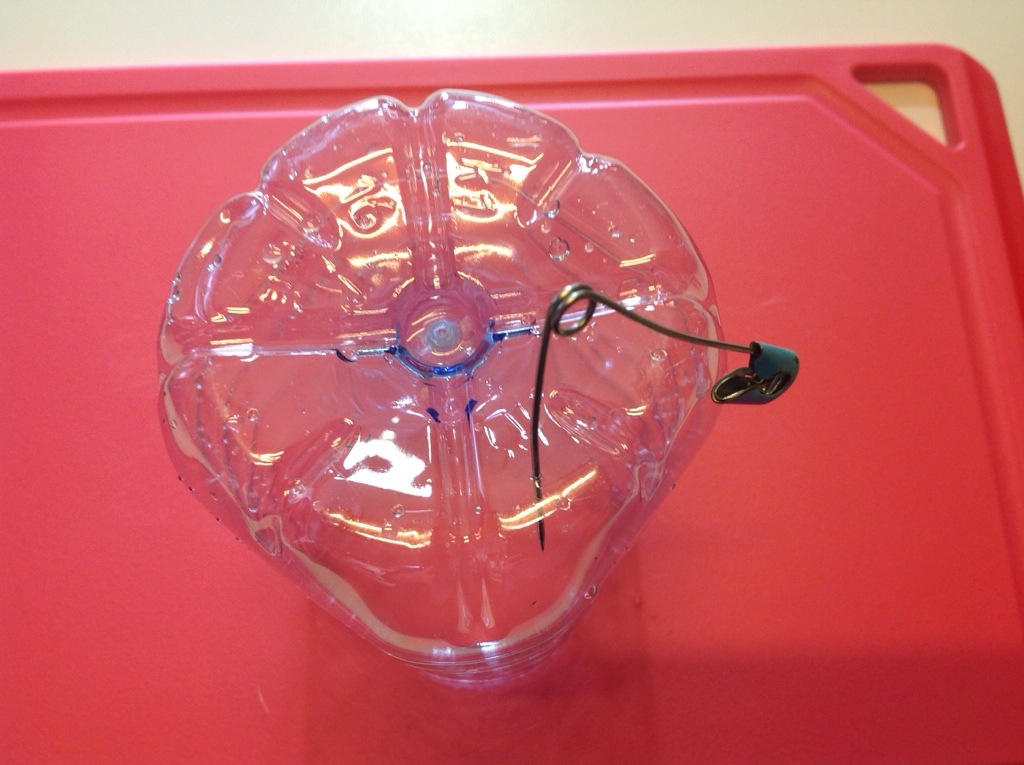
I cut the octopus into pieces, separating the tentacles and cutting the head into 2 parts. Small pieces are unnecessary. Remove the fattier part if desired, but do not dry it: the liquid will act as the ‘glue’ holding it together.
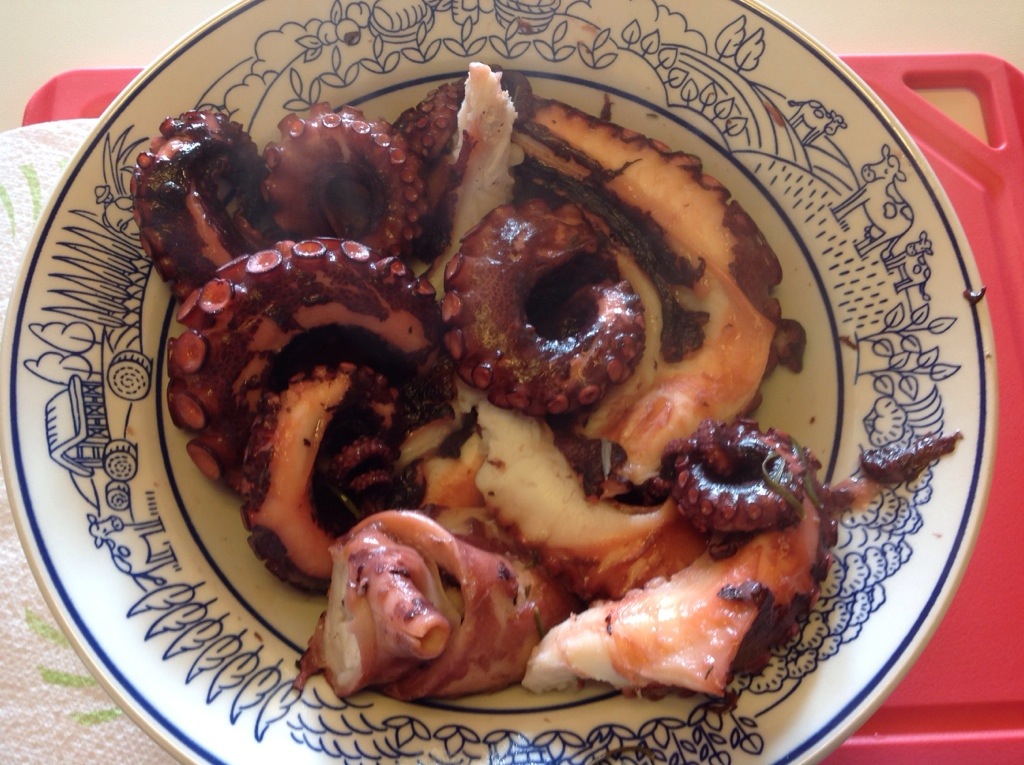
I start putting the pieces into the bottle, pressing them firmly.
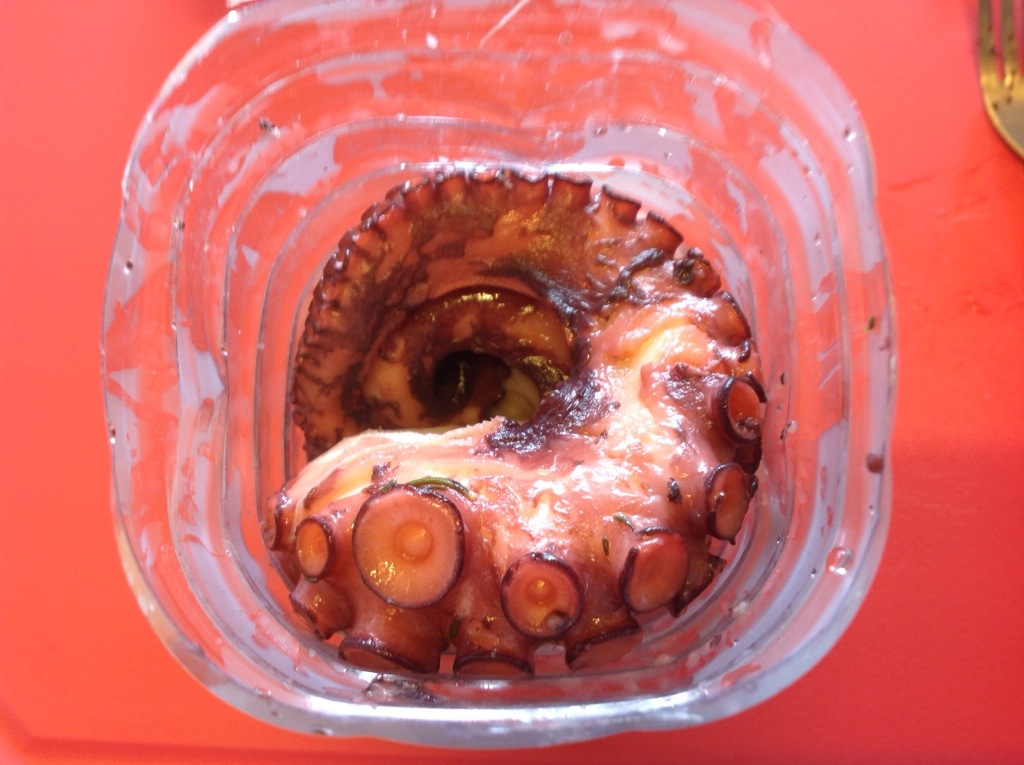
Once all are inside, I cover with cling film.
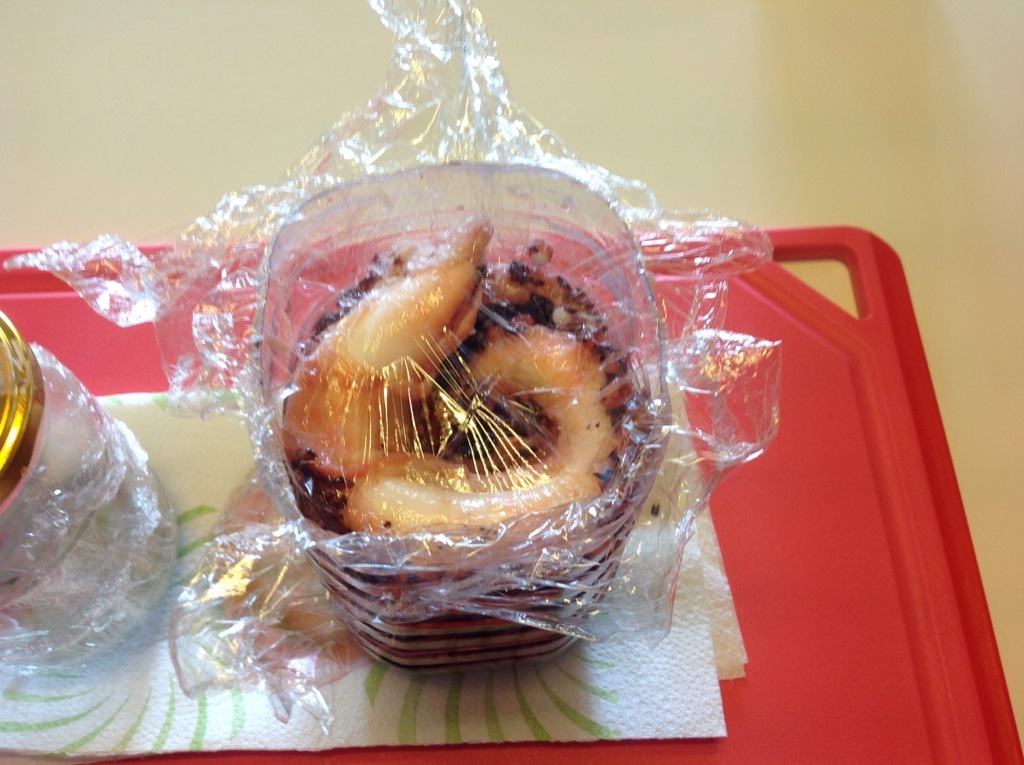
I take a small tin, or something with the same circumference as the bottle, and cover it with cling film.
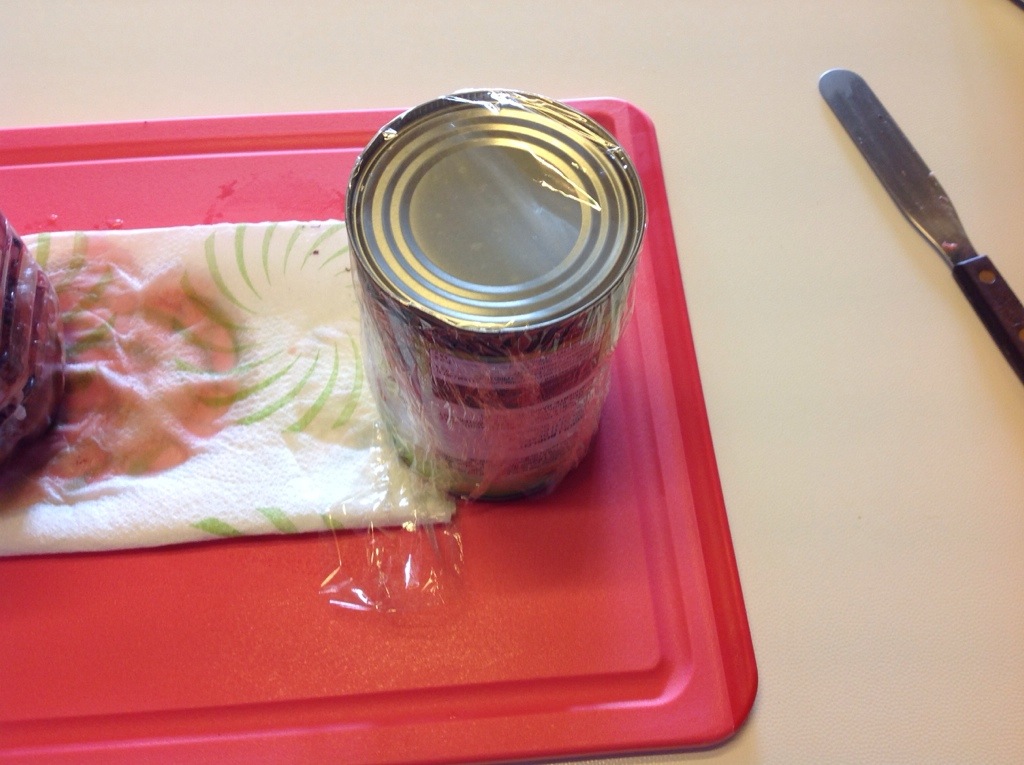
I insert it into the bottle, pressing firmly to remove every gap. I place kitchen paper underneath because excess liquid and air escape through the holes.
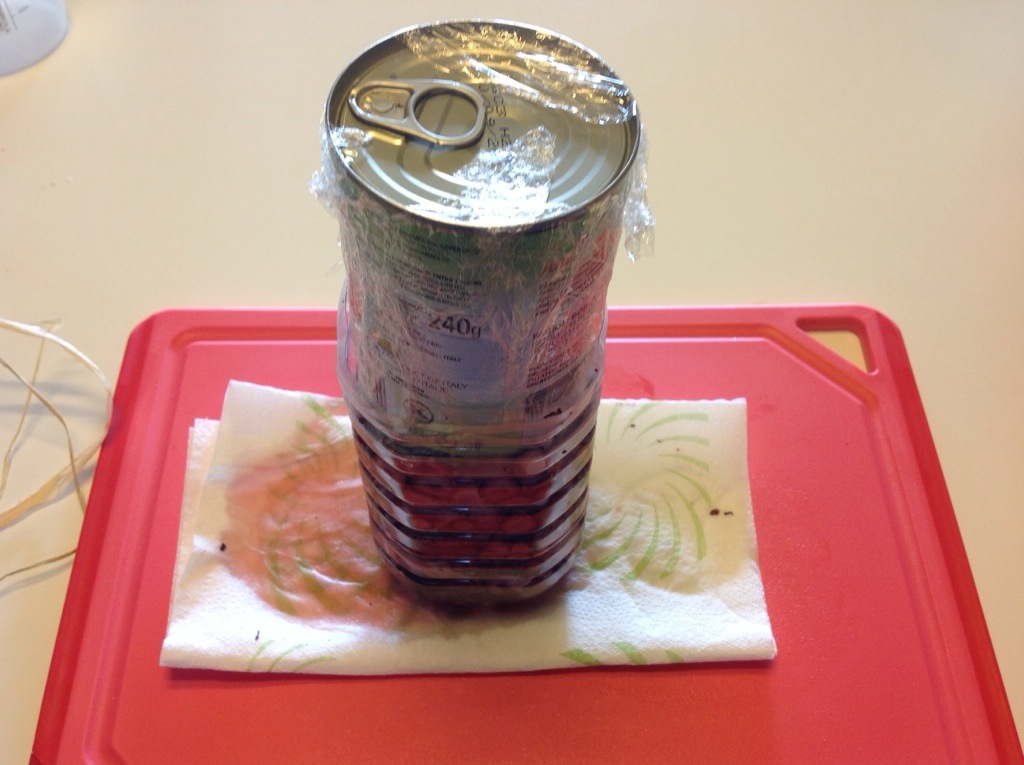
I tie the two containers very tightly together with string to keep everything firmly compressed.
I refrigerate the assembled container. It is best made the day before: as it cools, the gelatine released by the octopus binds it.
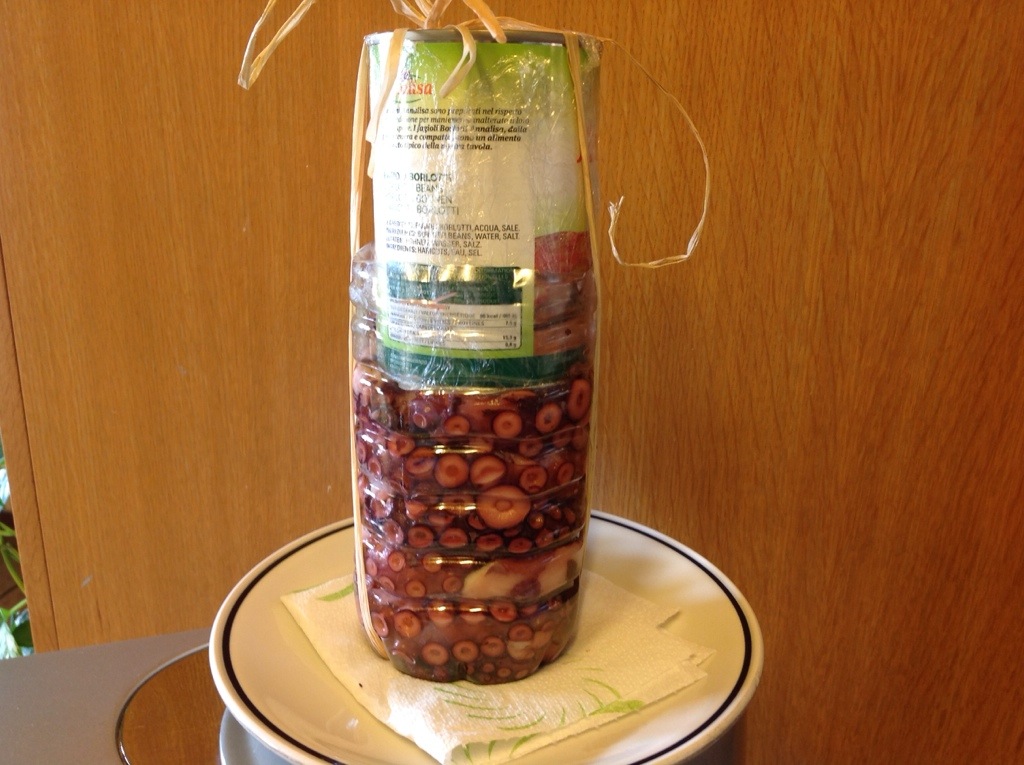
The next day, or after at least 8 hours, I remove the string and tin, then cut away the plastic container with scissors.
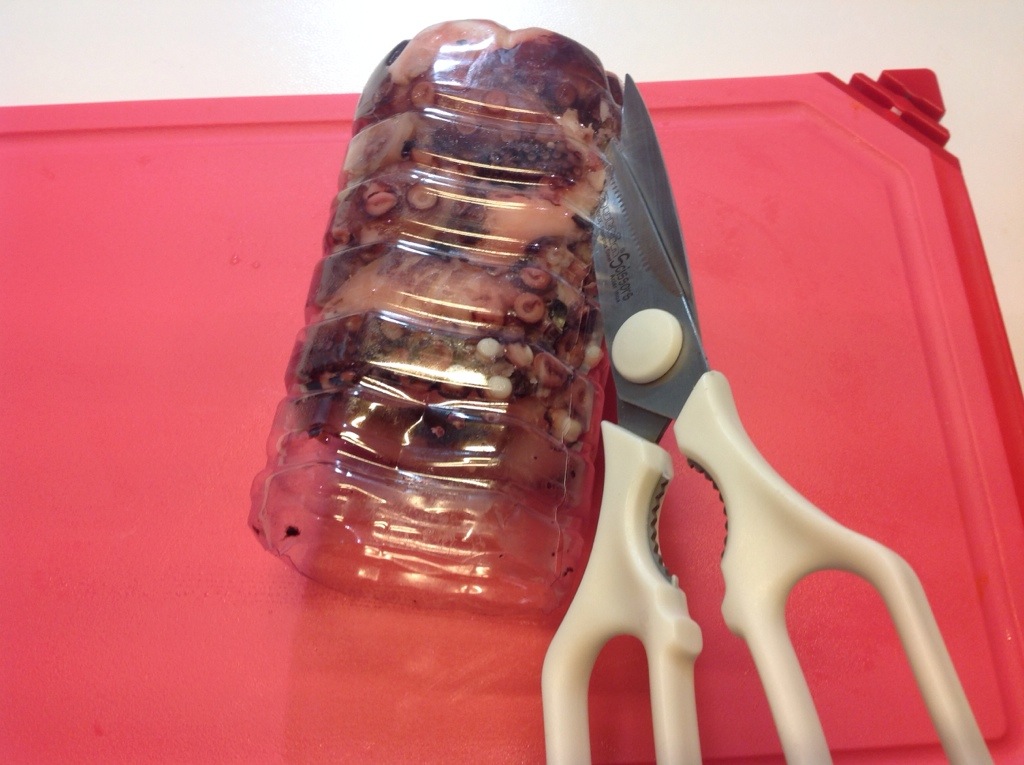
The result is a very compact octopus roll. I place it on a board and slice with a very sharp knife.
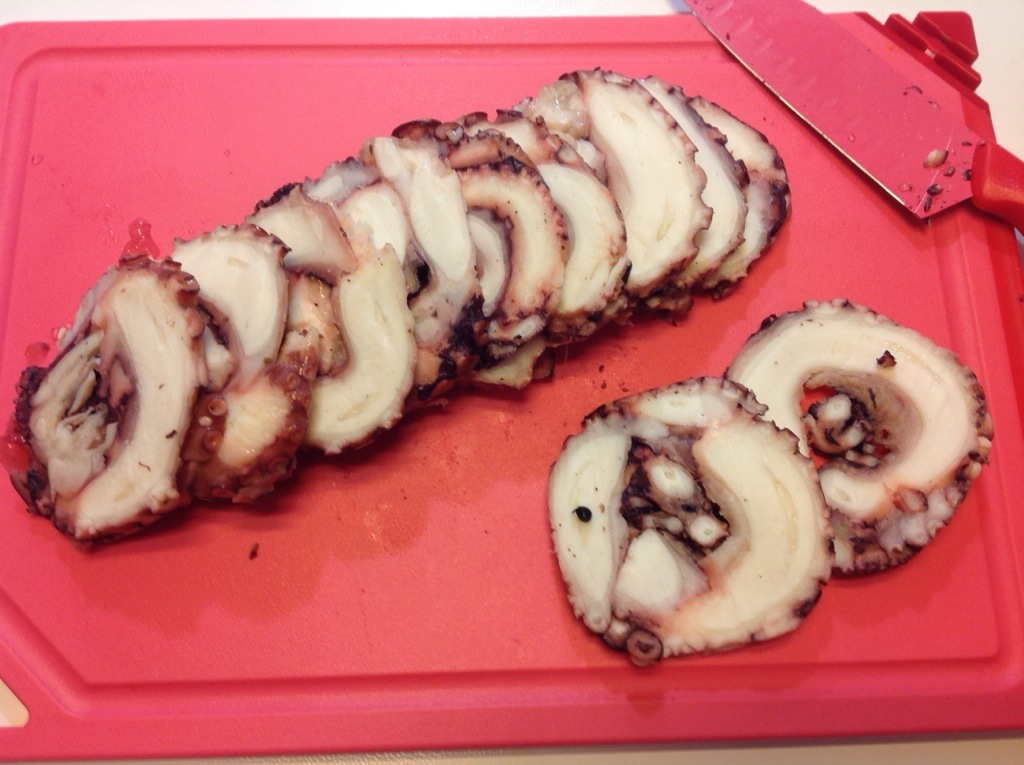
I prefer slices that are not too thin, but you can use a meat slicer for carpaccio-thin slices if you wish.
I emulsify lemon, oil, salt, pepper and parsley and dress everything.
I also prepare boiled potatoes. To save time, I peel and dice them.
I add a couple of fingers’ depth of water, cover with pierced cling film and microwave at full power for 10 minutes.
Done: an excellent starter, or a main course if you increase the quantity.
Original source: https://incucinaconlilly.com/2014/01/11/carpaccio-di-polipo-o-polipo-in-bottiglia/
Reserved advertising space · no adverts are active