
Sushi
Published on 24 February 2014
Favourites stay in this browser only. Sign in to save them to your account.
Selections and your current step are saved in this browser for this recipe.
Ingredients and method
The preparation remains in its original order; guided mode is not available for this structure.
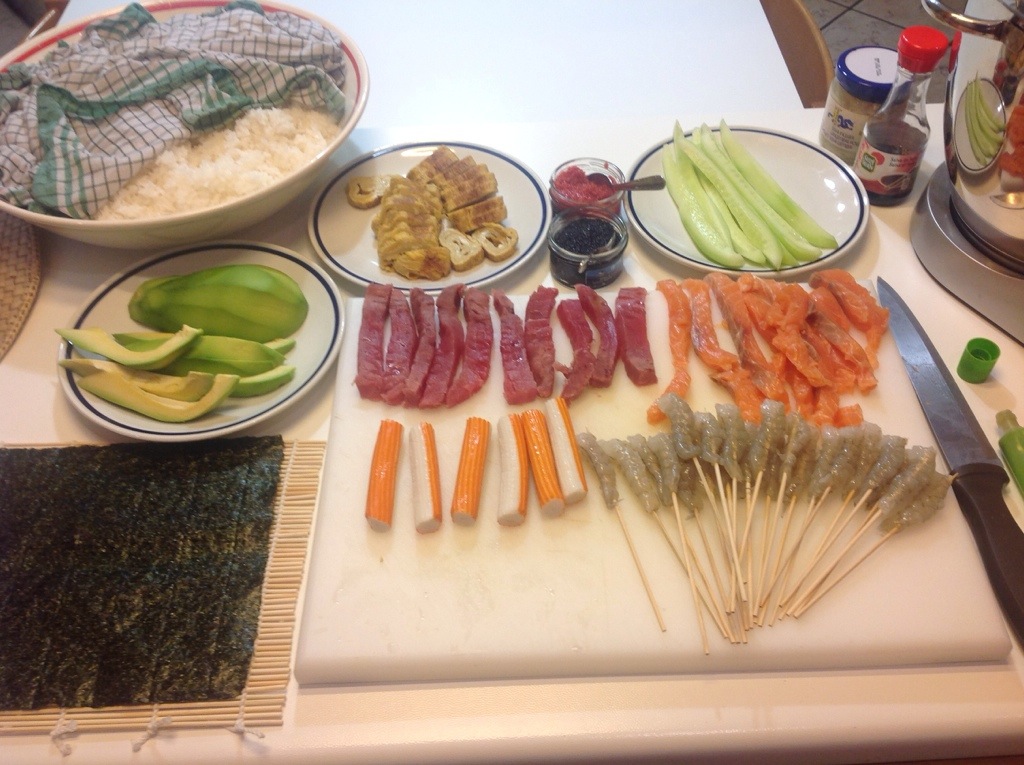
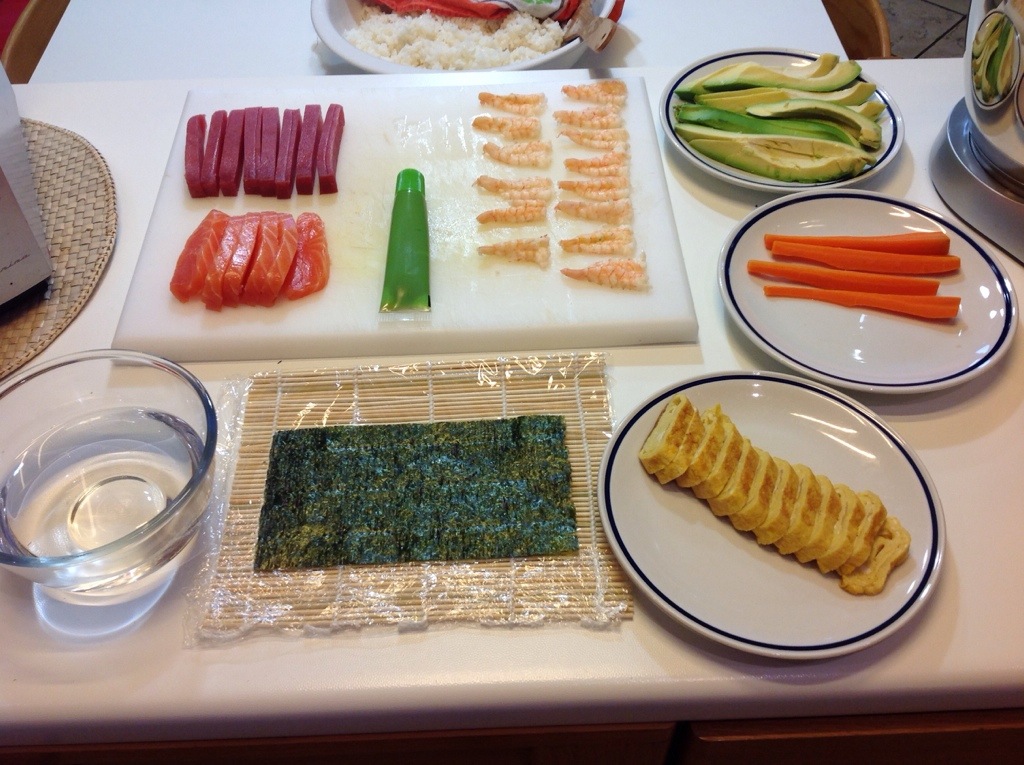
I am no sushi master: I simply want to share this enjoyable experience. I had long been curious, then decided to try. It was fun and challenging. There is room for improvement, but I am pleased.
Ingredients
500 g Japanese rice, called kome
Nori
1 tuna steak
1 salmon steak
Surimi, crab meat
Red and black lumpfish roe
1 avocado
Prawn tails
Blanched carrots
Cucumber
Wasabi paste
Soy sauce
Black sesame seeds
Pickled ginger
Japanese omelette
First, freeze the fish for at least 36/48 hours before eating raw, to kill anisakis parasites that can occur in raw fish and cause serious intestinal problems. Your fishmonger may sell it already prepared.
Cut fish, cucumber, blanched carrots and avocado into centimetre-thick sticks.
Japanese omelette
3 eggs
1 tablespoon soy sauce
Seed oil
1 pinch salt
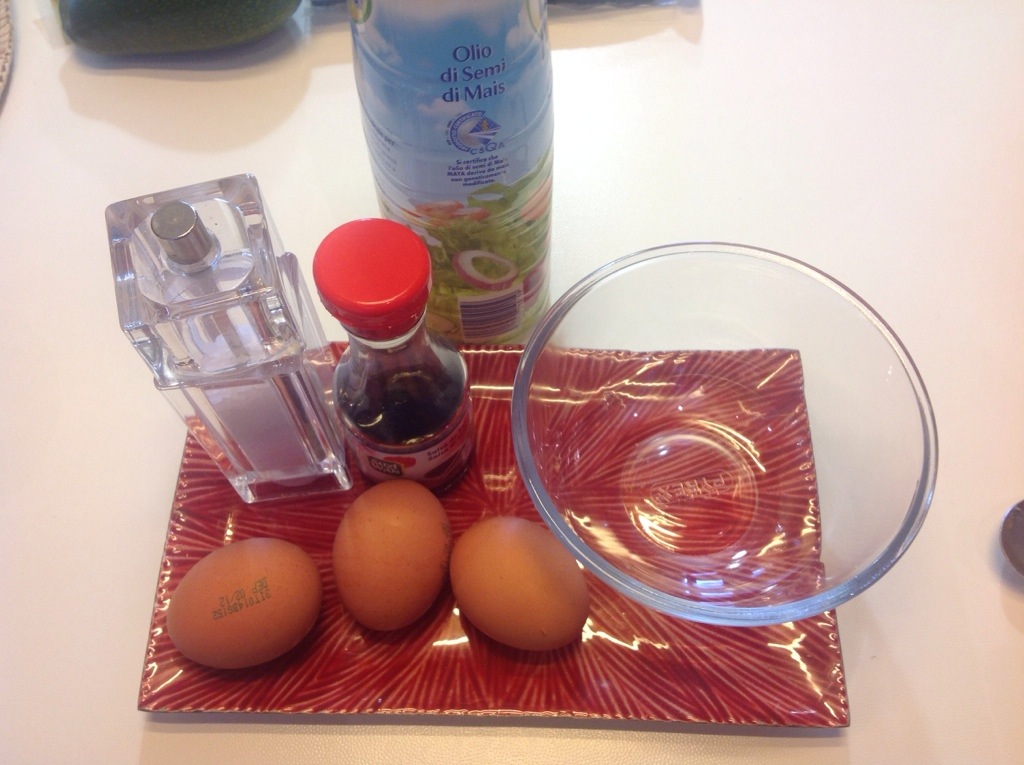
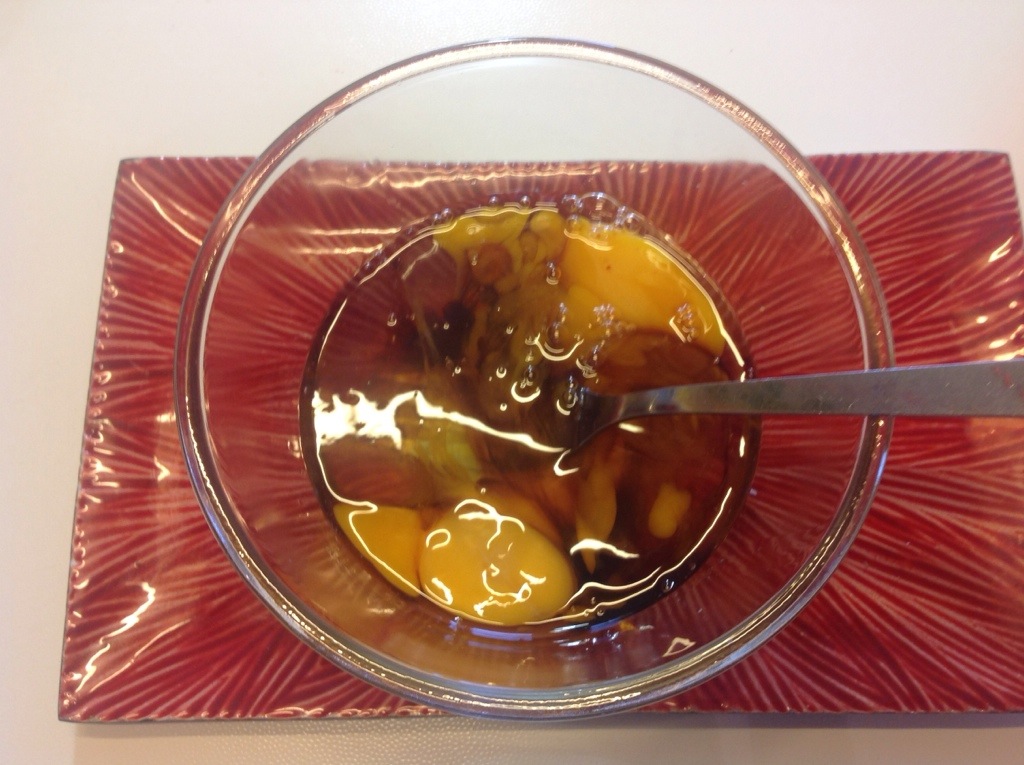
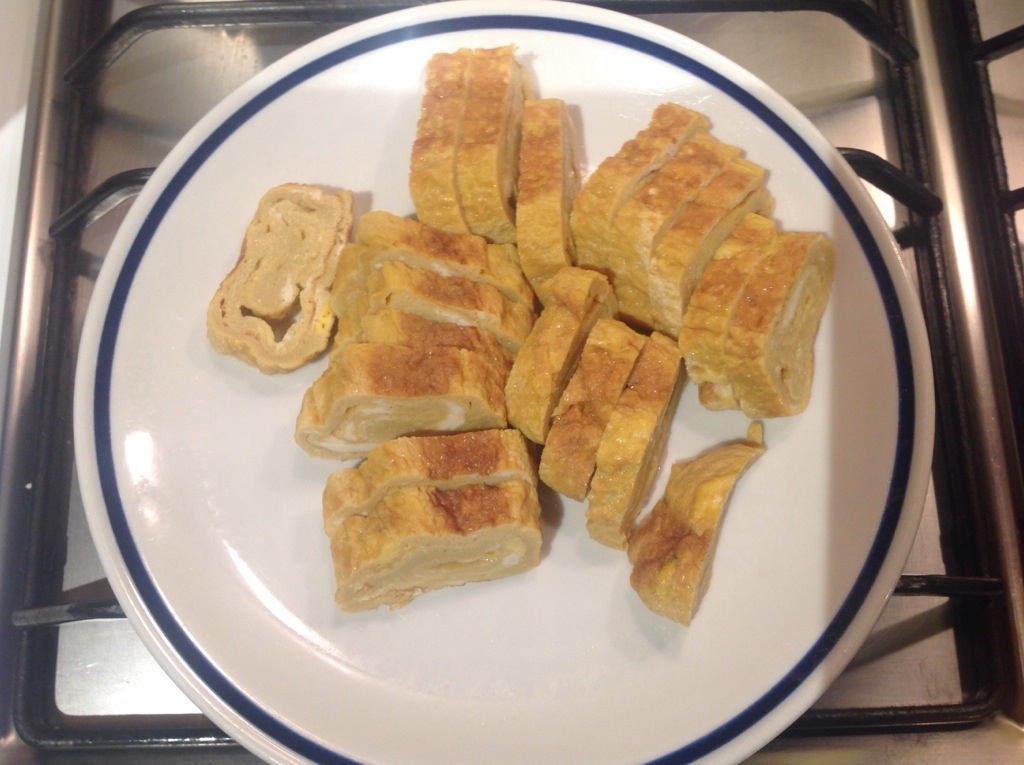
I beat eggs, soy sauce and salt in a bowl.
I add a little oil to a non-stick pan and pour in half the egg mixture.
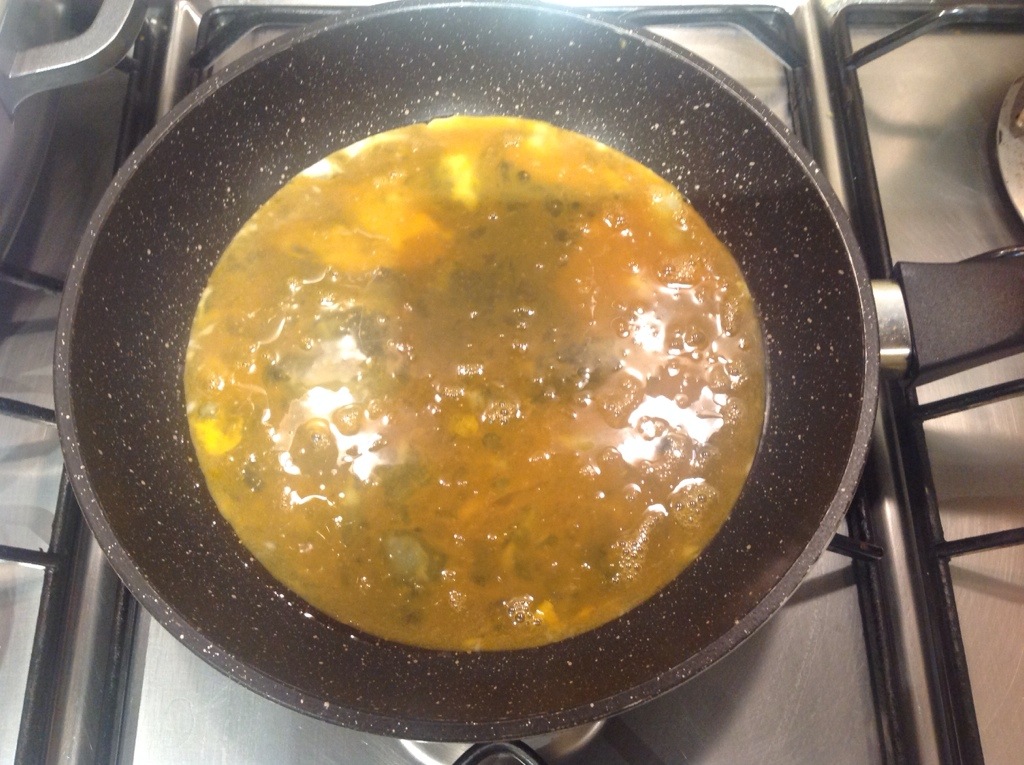
I let it set and roll to one side.
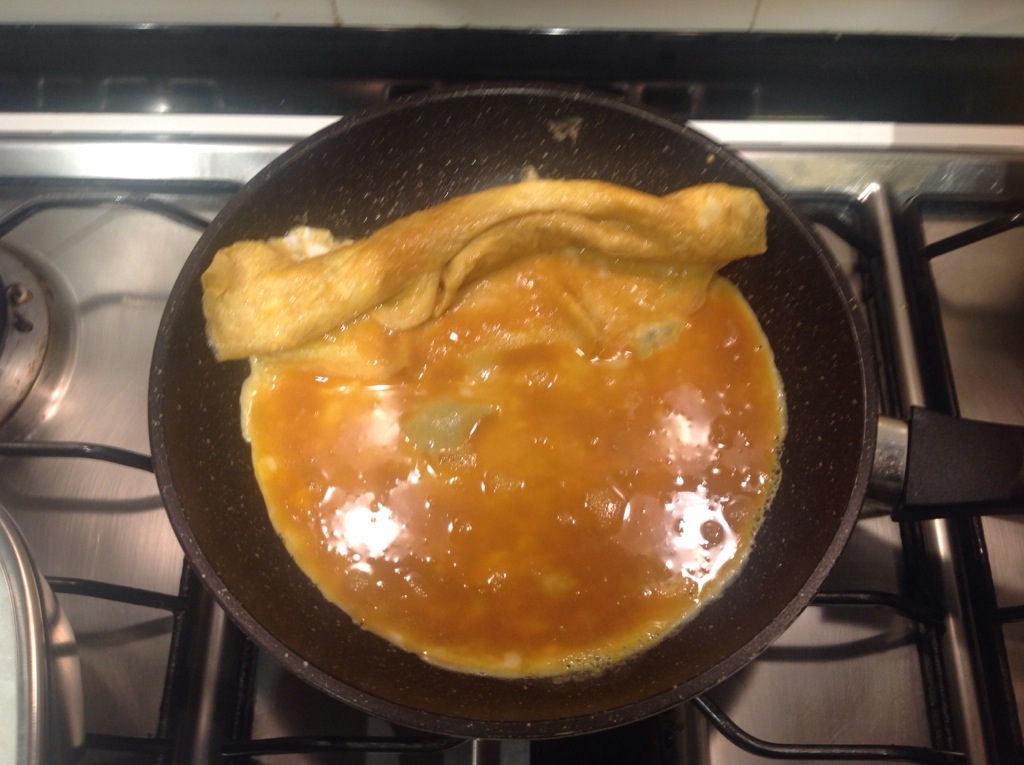
I add the other half, let set and roll again.
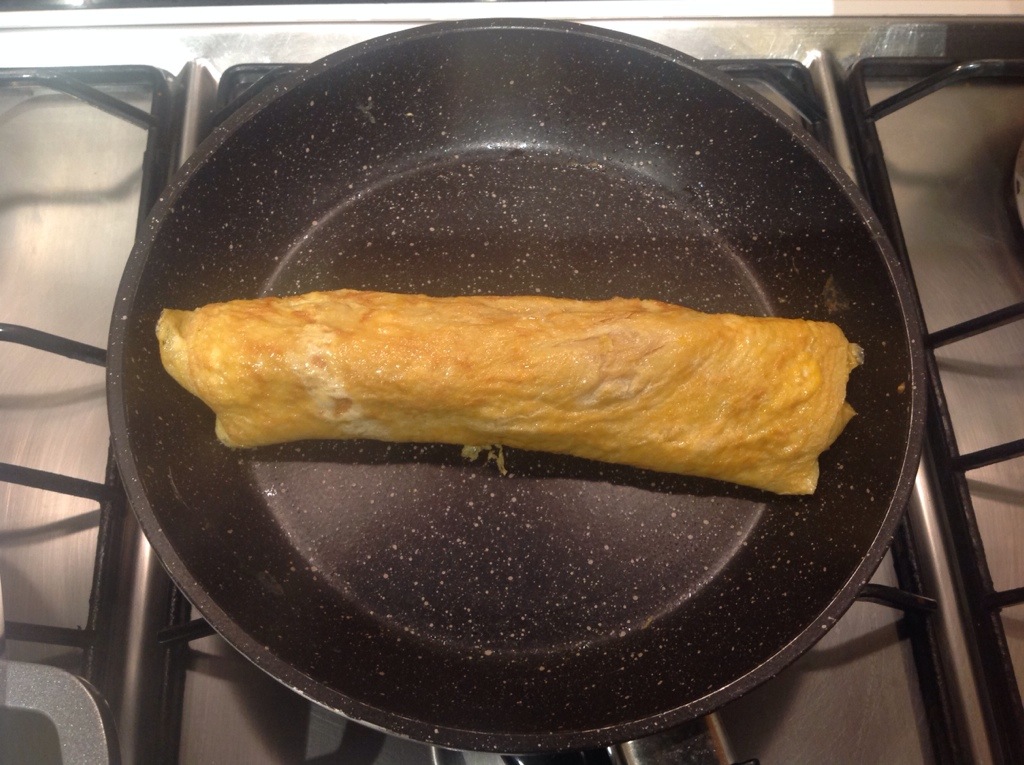
I tightly wrap in cling film into a sausage and refrigerate.
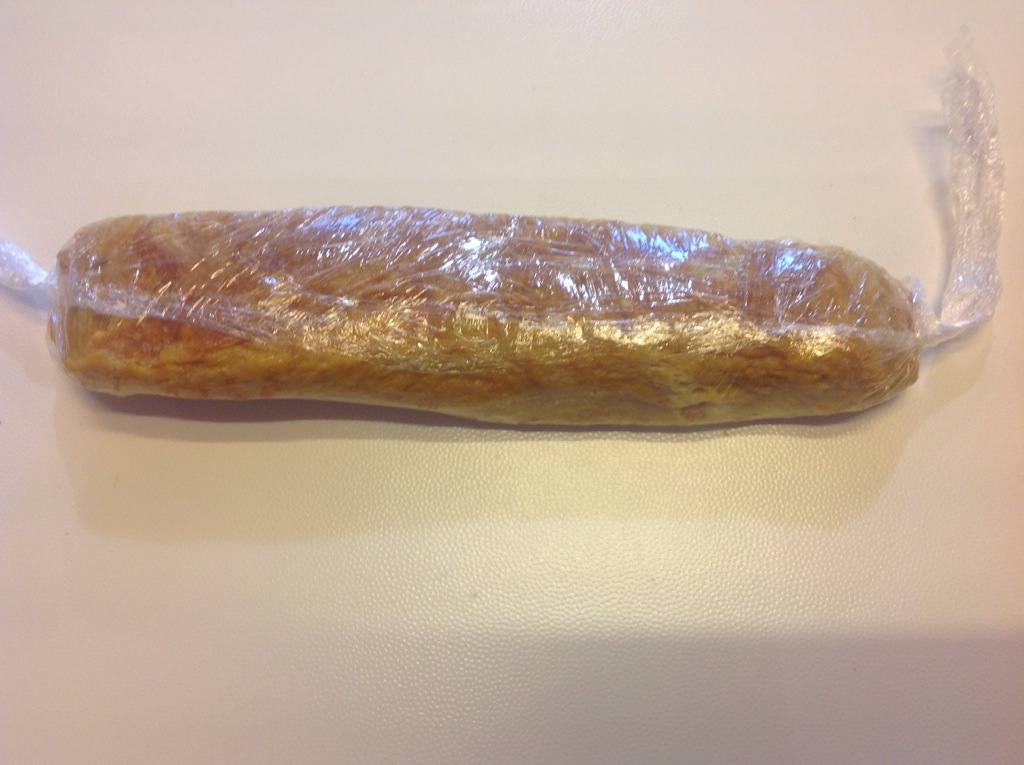
Once cold, I thinly slice diagonally.
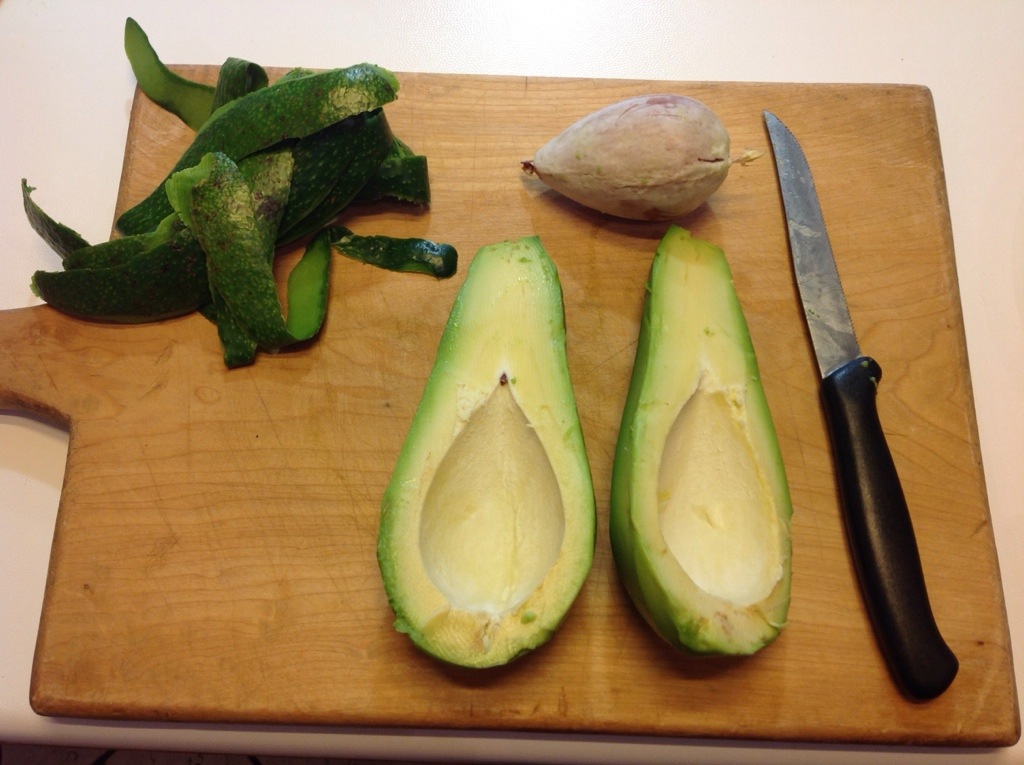
I halve, stone, peel and cut a ripe avocado into 1 cm sticks.
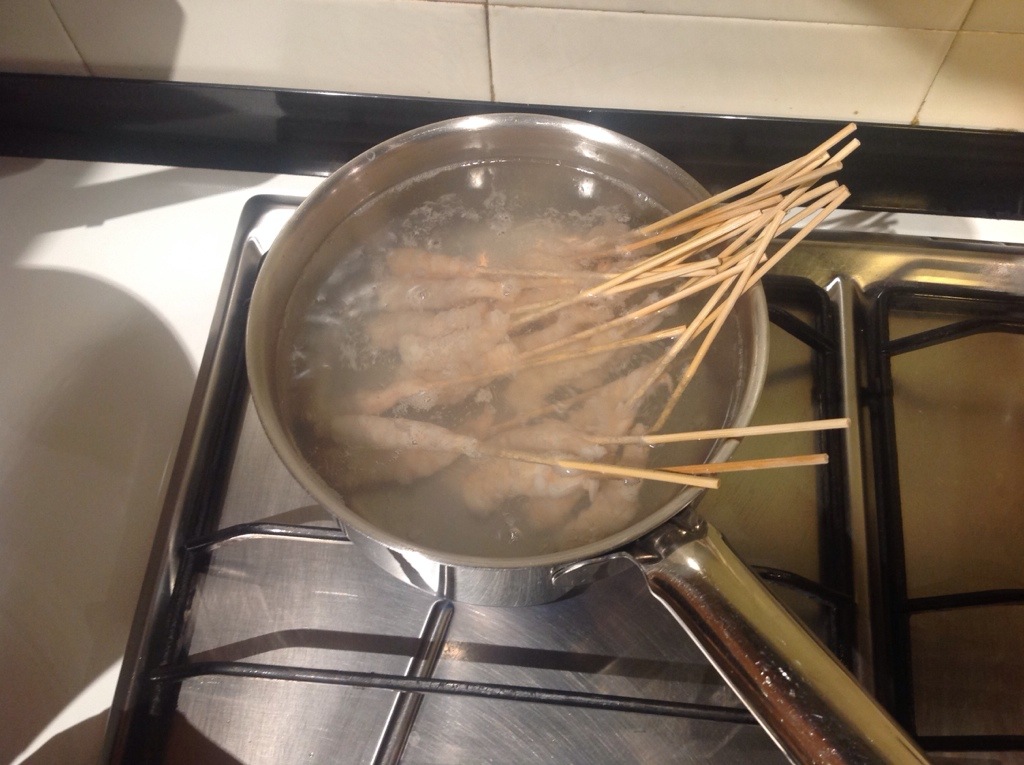
I clean prawn tails, skewer from the bottom to keep straight and blanch a couple of minutes in lightly salted boiling water.
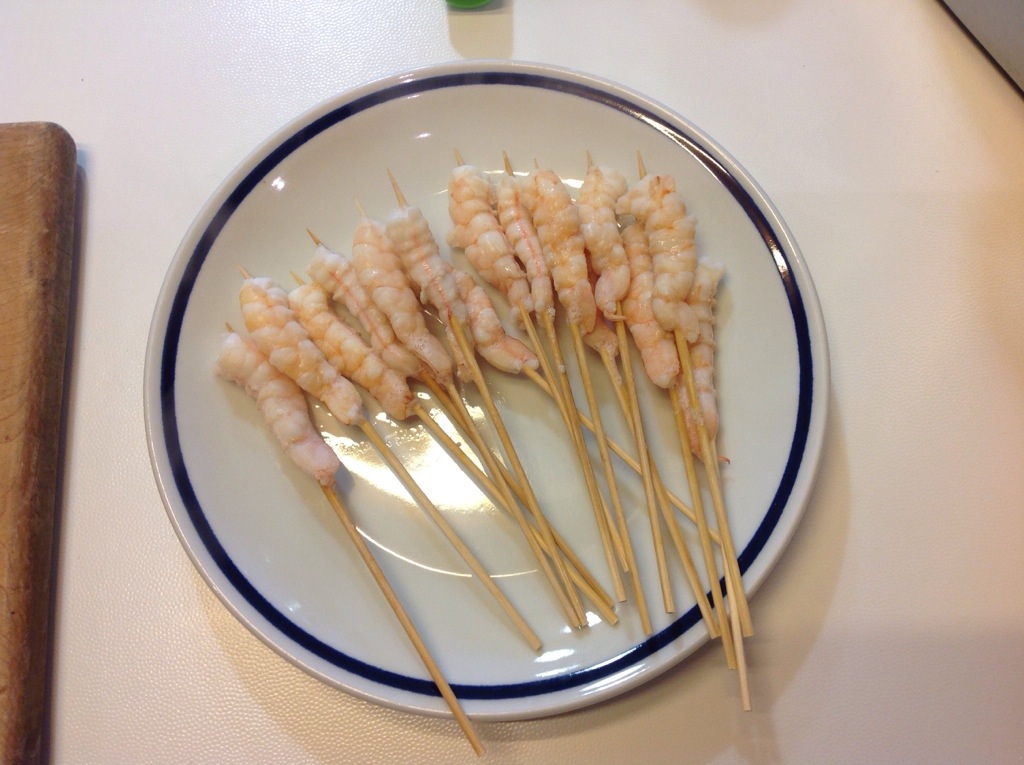
Everything is ready and cut. I begin the rolls.
I prepare cold water acidulated with 2 or 3 tablespoons rice vinegar and wet my hands whenever taking rice to prevent sticking.
You need a bamboo mat, optionally covered with cling film.
Hosomaki
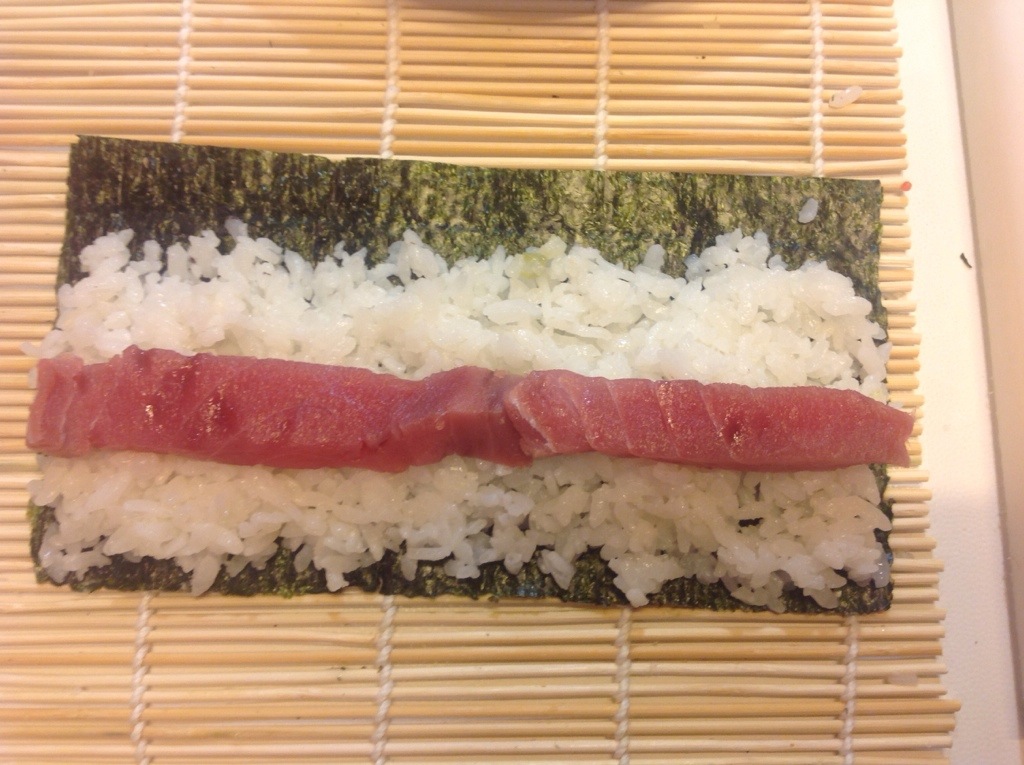
A nori-wrapped rice roll containing just one filling: tuna, salmon, surimi, one vegetable or avocado. I place half a nori sheet shiny side down on the mat. With wetted hands, I evenly spread about 100 g rice, leaving about a 2 cm strip at the upper edge. I spread a thin streak of wasabi in the centre; use very little because it is extremely hot. I add a lengthwise strip of chosen filling and roll tightly, pressing firmly.
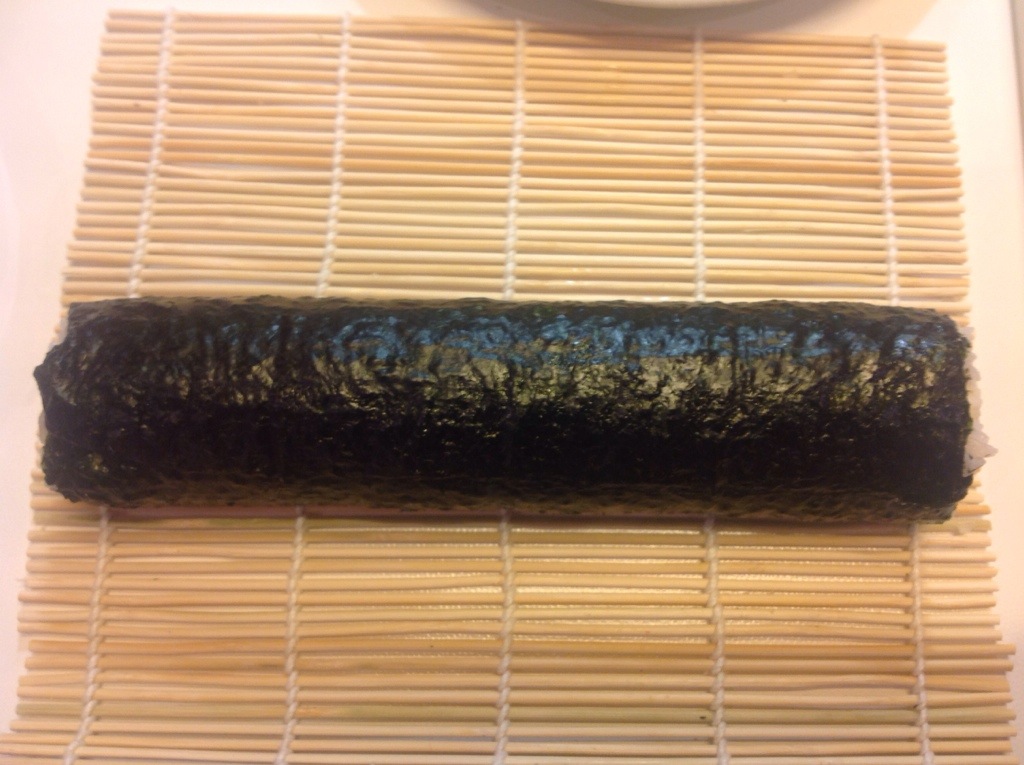
I roll with the mat and seal thoroughly to retain rice; moisture binds it. With a very sharp knife moistened in acidulated water, I halve the roll, then cut into 3 pieces to make 6 equal pieces.
FUTOMAKI
A whole-sheet nori roll with rice and at least 4 chosen fillings. I wet my hands and spread about 150 g rice on the nori.
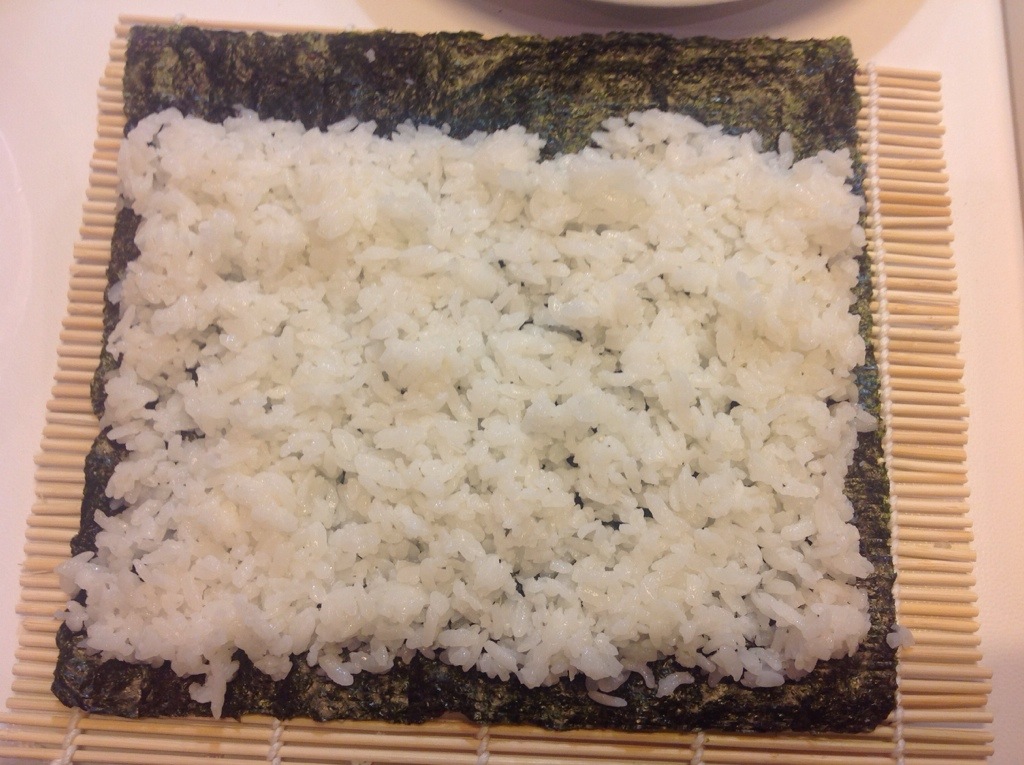
I spread a tiny amount of wasabi in a thin line.
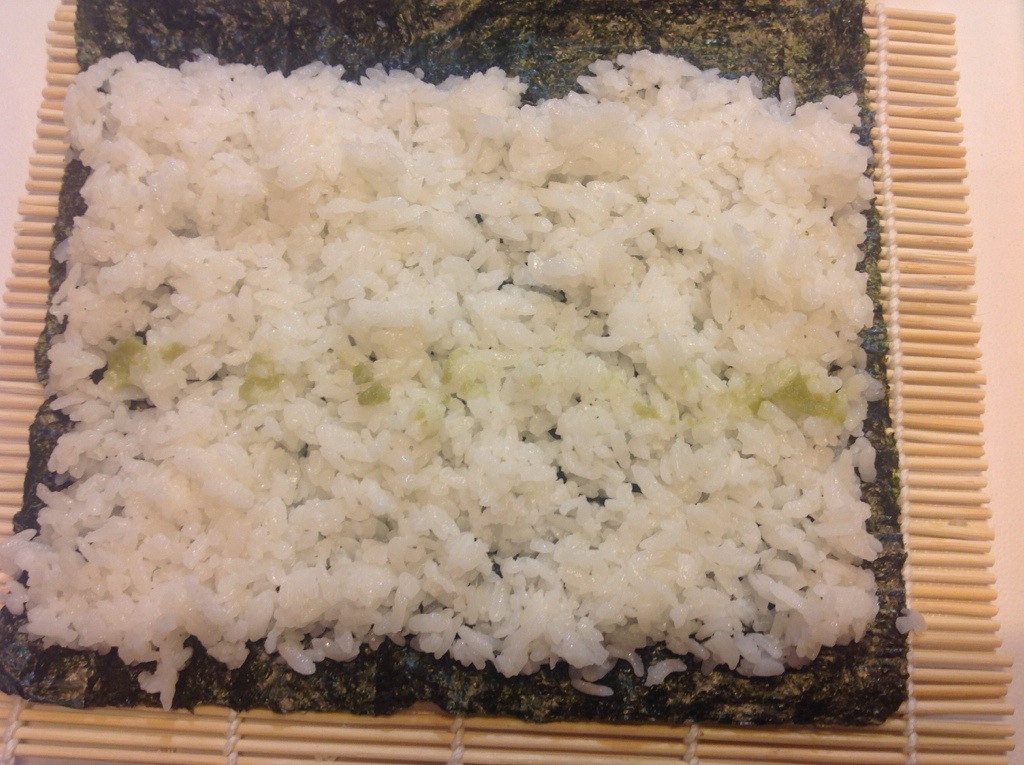
I arrange the 4 chosen ingredients, varying them.
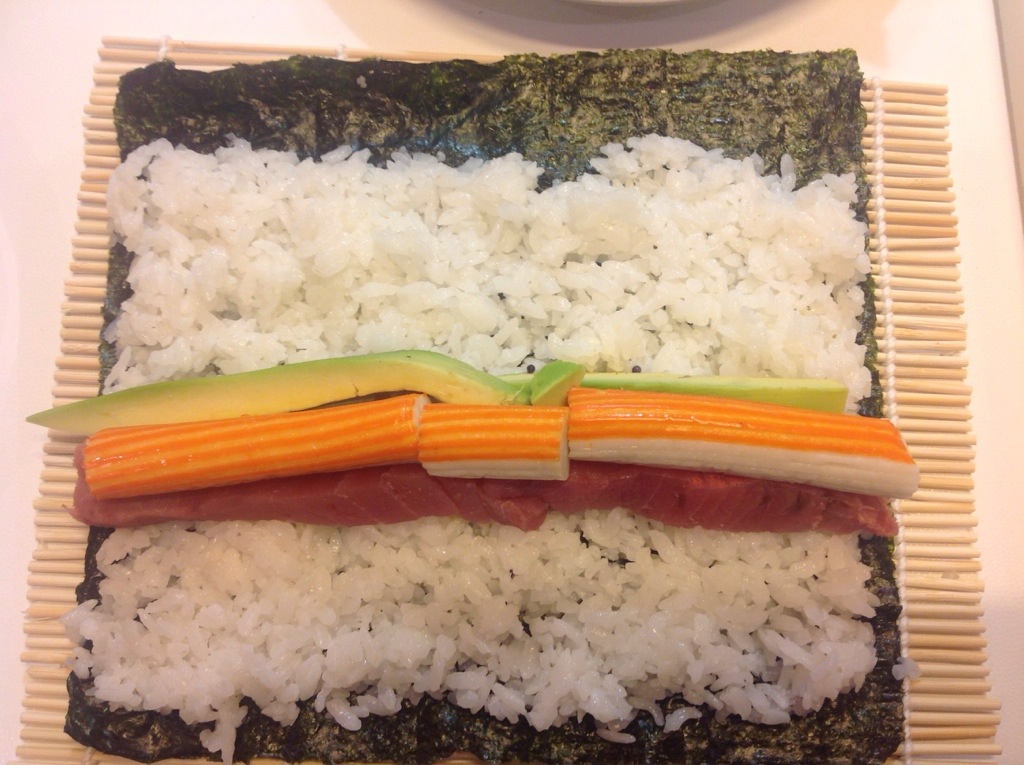
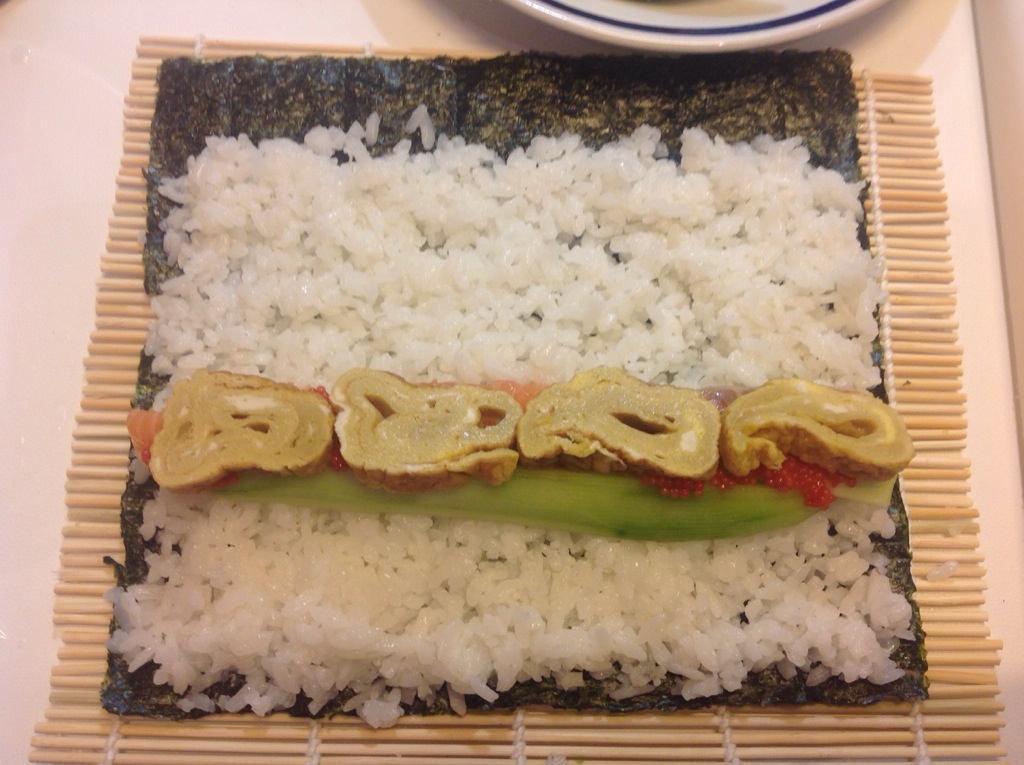
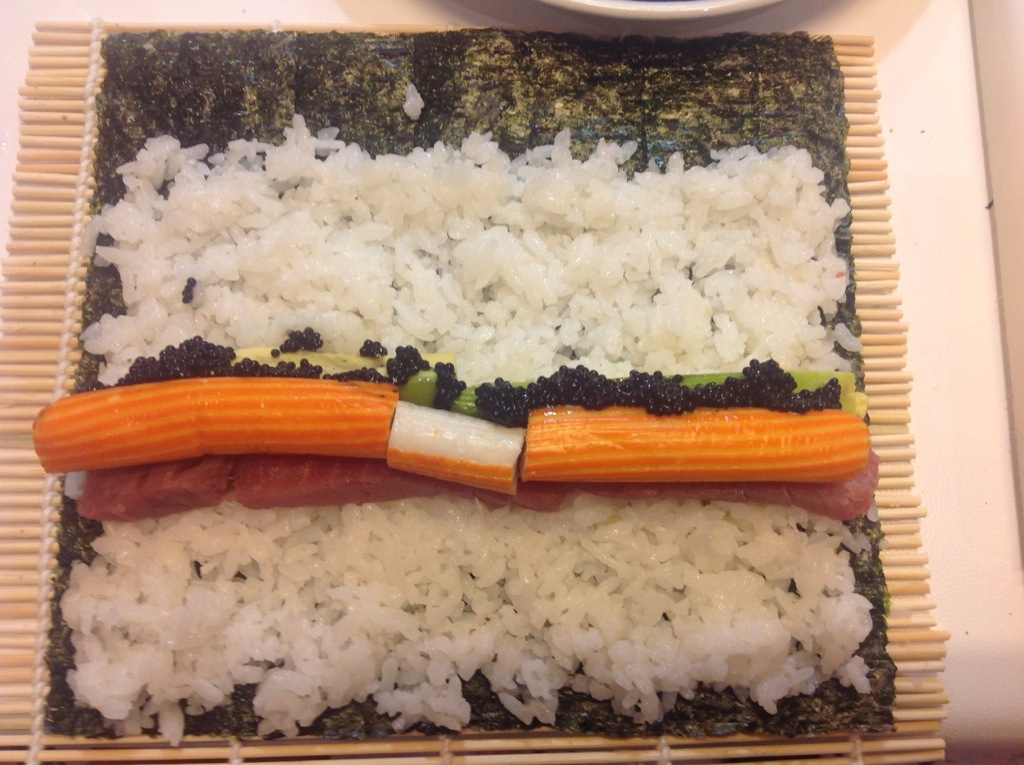
I roll tightly with the mat, pressing firmly.
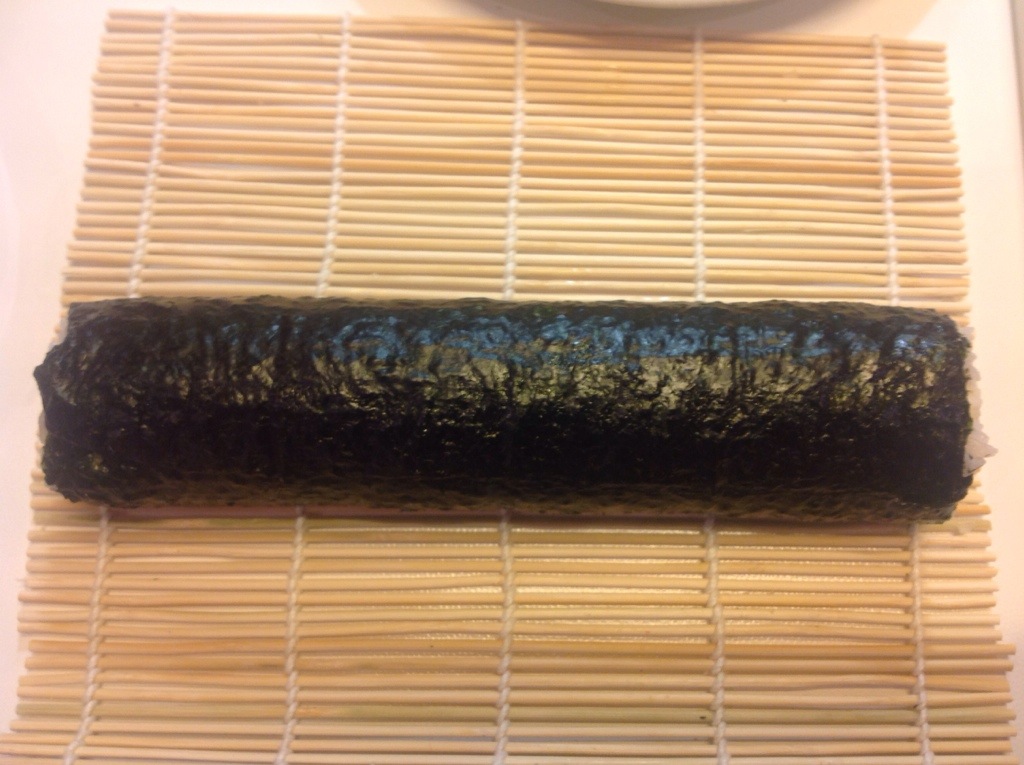
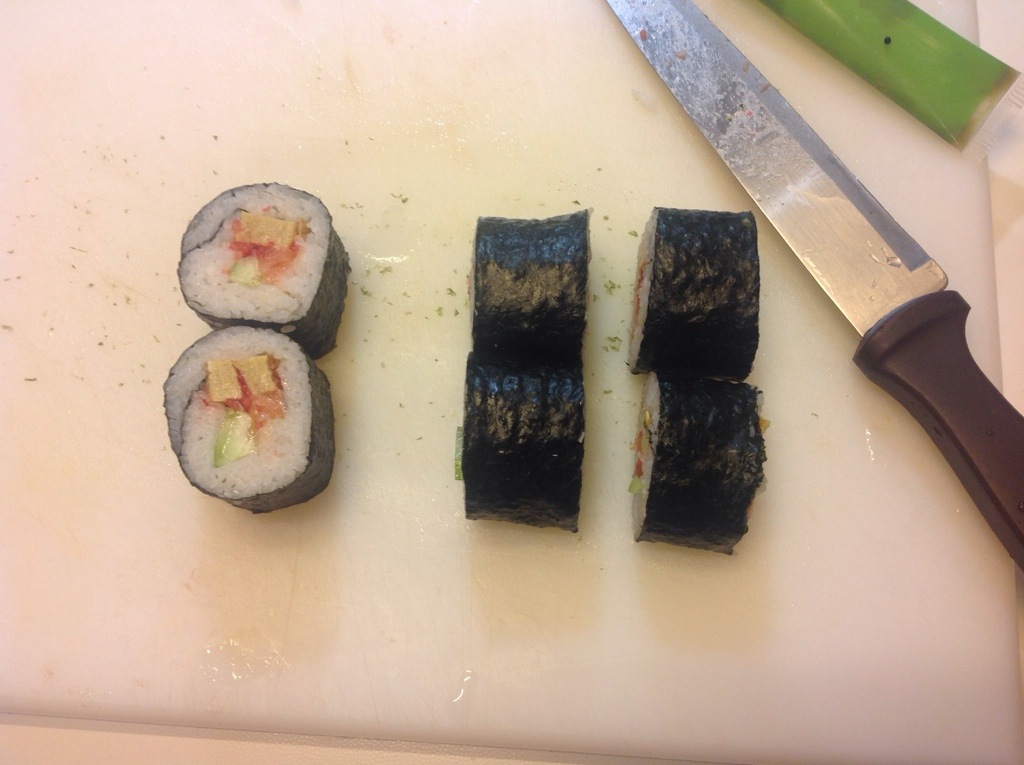
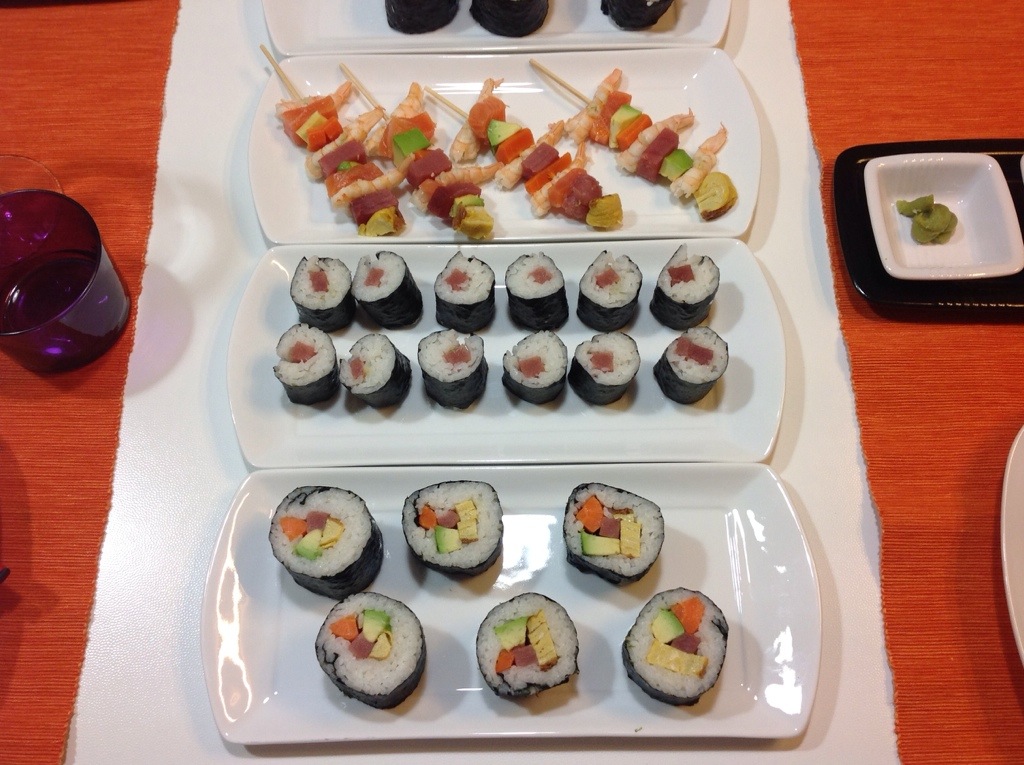
I halve with a sharp knife, align halves and cut into 6 pieces to obtain 12. The pieces shown need halving again for 12, or they are too large to eat easily.
NIGIRI
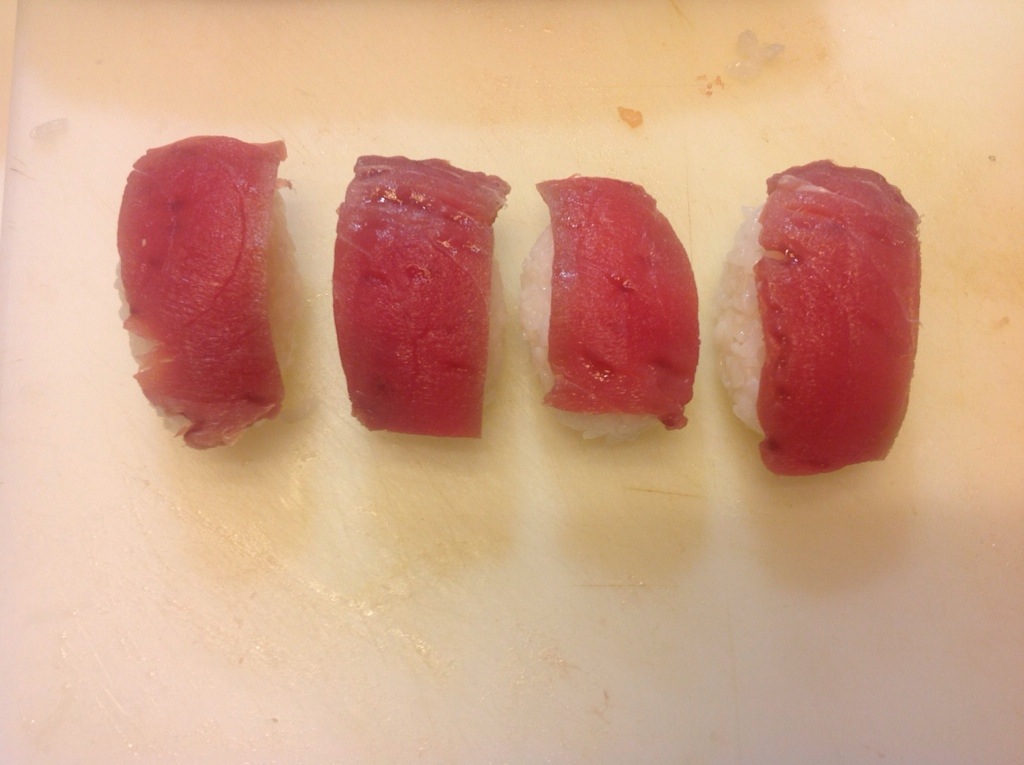
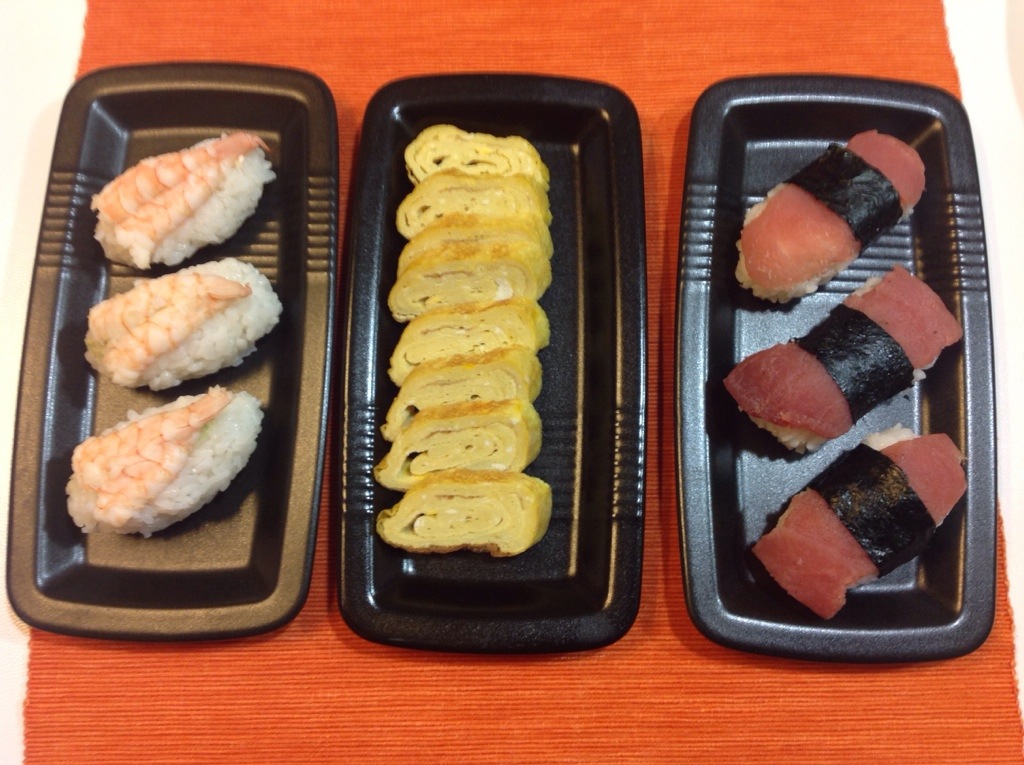
An oval rice mound topped with tuna, salmon or a prawn split to its tail, cooked as mine was or raw if preferred. I shape about 25 g rice in my hand moistened with acidulated water, without pressing too hard or it becomes firm. I top with a little wasabi and thin fish or omelette, optionally decorating with a nori strip.
URAMAKI
A roll with nori inside and sesame-coated rice outside, preferably black sesame. I used a whole sheet in the photograph, but use half: smaller rolls are easier to eat. I place half a sheet shiny side down, wet my hands, spread about 120 g rice over all of it, sprinkle with sesame and press firmly. With a decisive movement, I turn it rice-side down onto the mat.
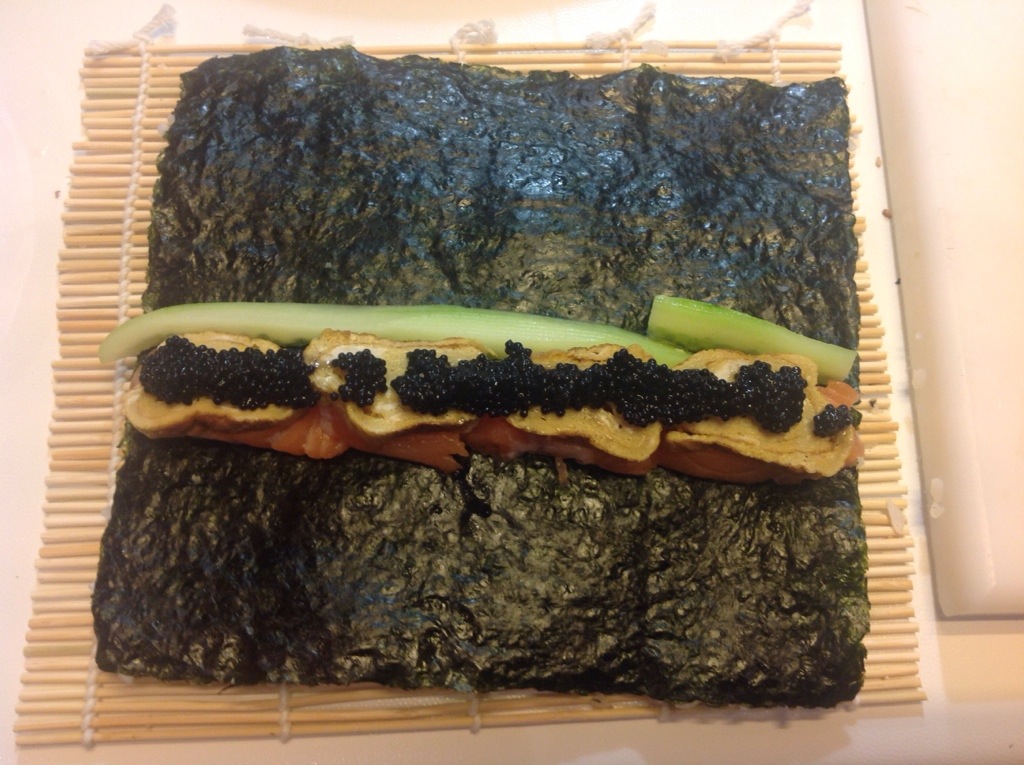
I add two or three ingredients, optionally Philadelphia sticks, and roll tightly with the mat. I cut with a sharp damp knife, first in half, then each half into 3 equal pieces.
Arrange neatly and serve with bowls of soy sauce, wasabi and pickled ginger. Naturally, eat with chopsticks.
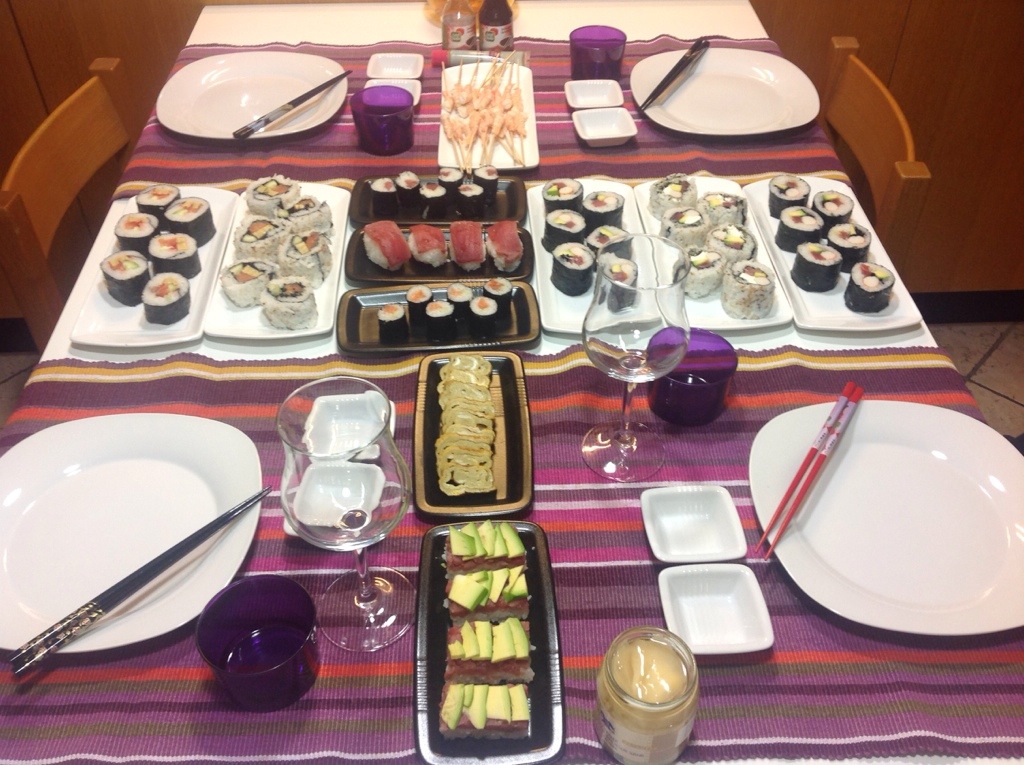
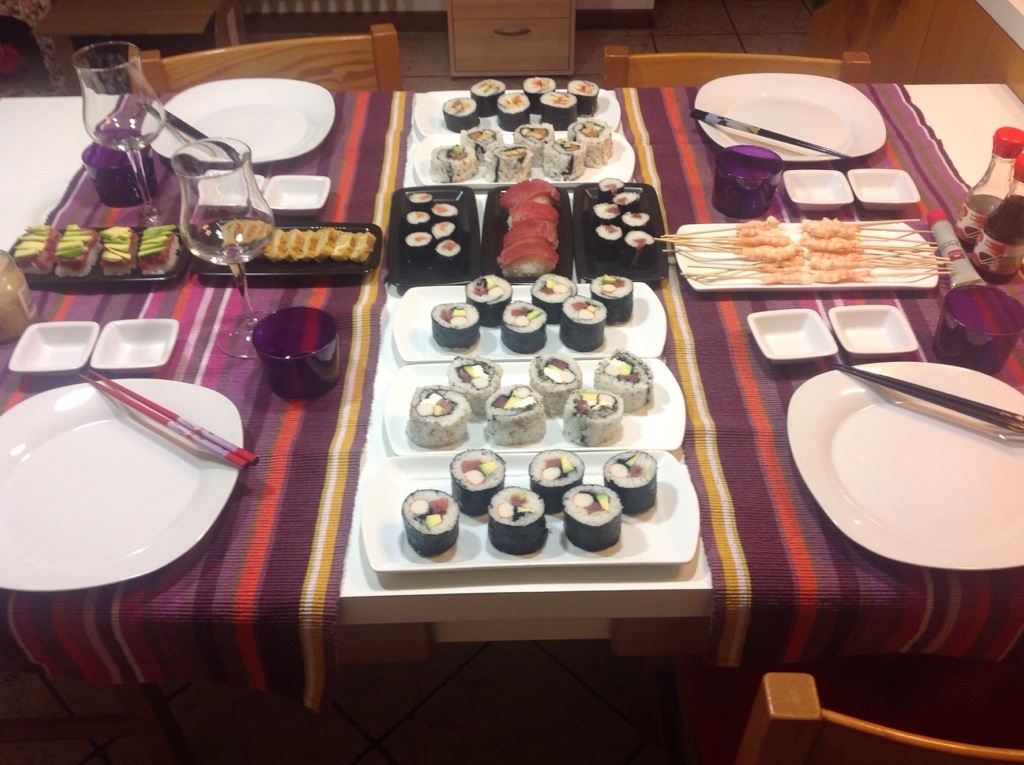
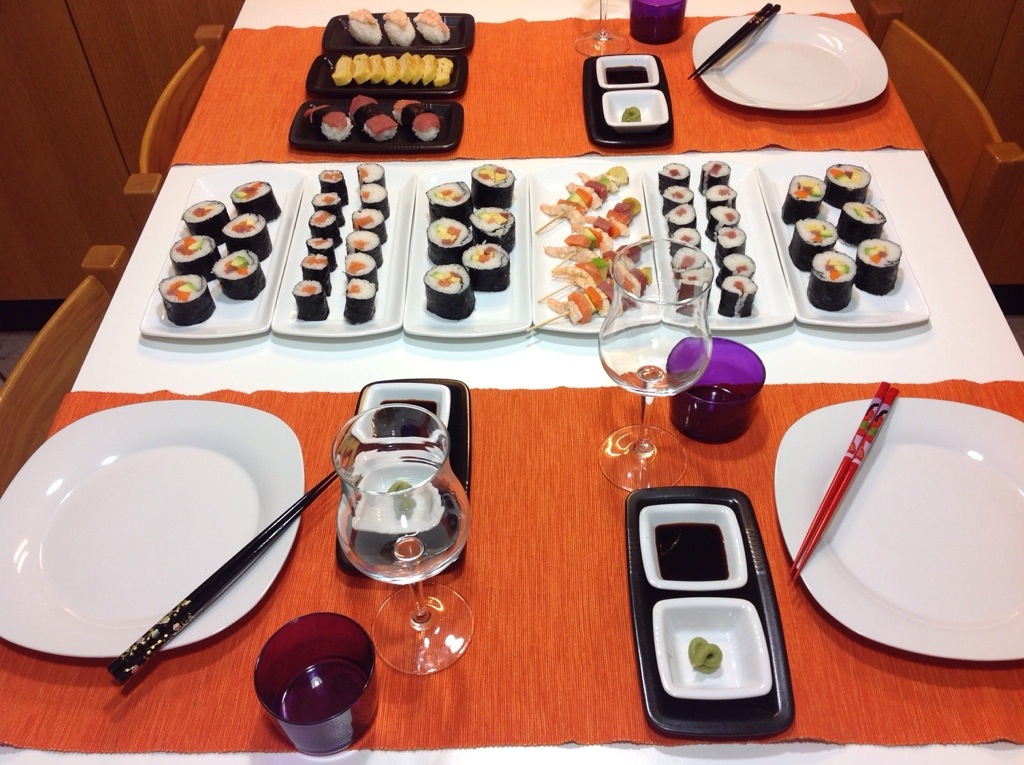
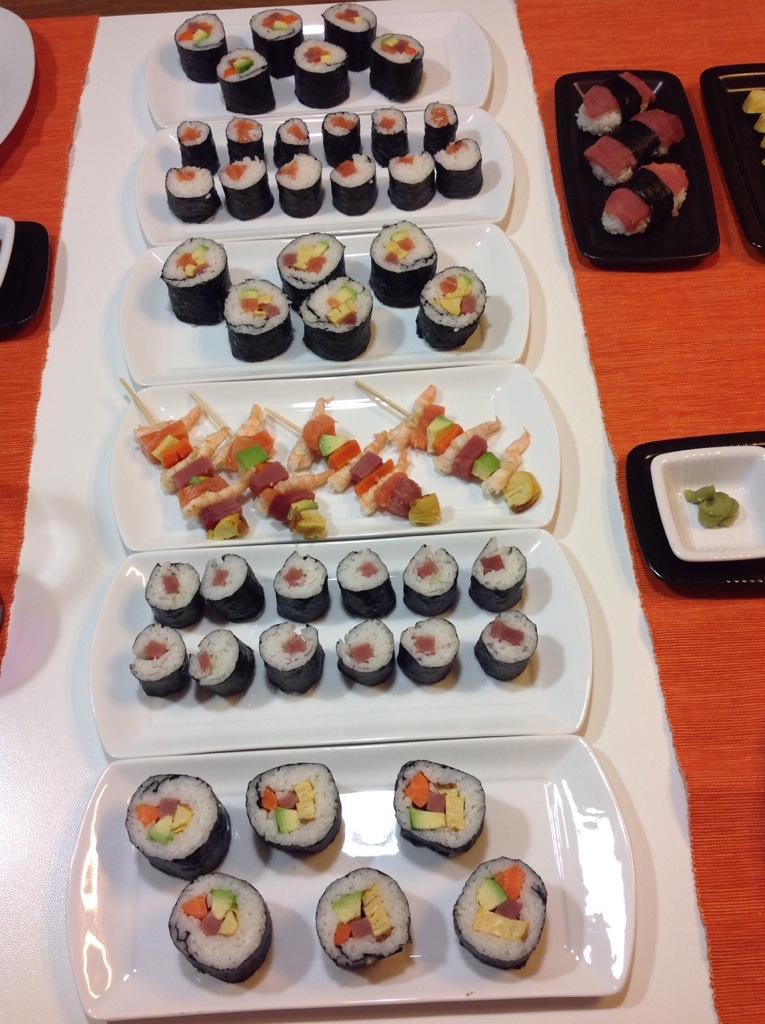
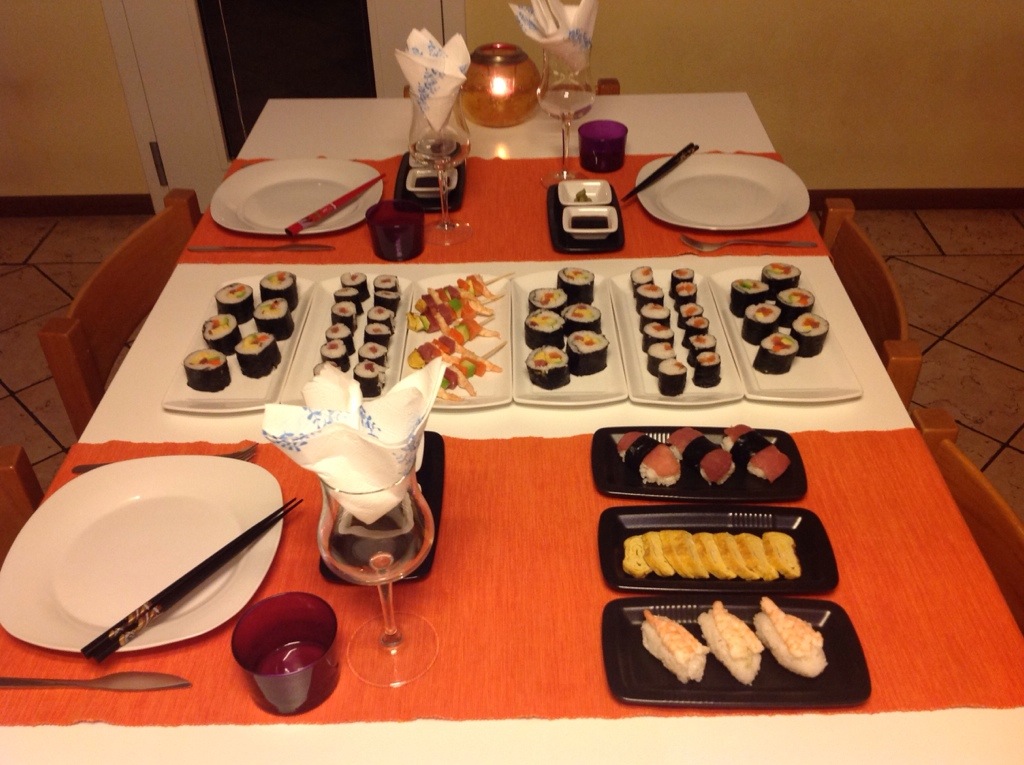
I also made assorted skewers with leftover ingredients.
Original source: https://incucinaconlilly.com/2014/02/24/il-sushi/
Reserved advertising space · no adverts are active