
Pasta e fagioli with Romagna giugetti
Published on 28 February 2014
Favourites stay in this browser only. Sign in to save them to your account.

Selections and your current step are saved in this browser for this recipe.
Ingredients and method
The preparation remains in its original order; guided mode is not available for this structure.
This old Romagna recipe features distinctive pasta called ‘giugetti’, made by farmers towards the end of winter when supplies ran low.
Ingredients for 6 people
For the pasta
150 g Italian '00' flour
150 g maize flour for polenta
Hot water, as needed
For the broth
2 carrots
1 onion
1 celery stalk
2 vegetable stock cubes, plus a little reserve stock
2 tins borlotti beans
Parsley
Pepper
Grated Parmigiano
Extra virgin olive oil
I drain and rinse the beans.

I chop celery, carrots and onion.

I put everything in a pan and add the two stock cubes.

I add 2 litres water, cover and cook for about half an hour.

Once the vegetables are cooked, I blend with a hand blender. It should be fairly runny.

I add parsley, adjust the salt, cover and rest.

I prepare the pasta.
Italian '00' flour, maize flour and hot water.

I combine the two flours on the work surface.

I mix them thoroughly.

I add the hot water a little at a time.

I knead to a uniform, firm dough, form a ball, wrap in cling film and rest for half an hour.

After resting, I flour the work surface and place the dough on it.

I roll it out, flouring above and below.

I widen and turn it, rolling to about 3 mm thick. Ideally, let the sheet dry before cutting it into little squares.

I generously flour and roll up the sheet.

I slice it as for tagliatelle.

Then into small diamonds.

I separate and flour them, arrange on a tray and dry for about an hour, turning them.

I boil the broth, add the pasta and cook about 15 minutes, stirring continuously as it should be thick and tends to stick. Add vegetable stock if too thick.
I turn off, cover and rest for up to 1 hour.
Before serving, adjust salt and decide how thick you want it.
I serve with Parmigiano, freshly ground pepper and a drizzle of oil.

My guests loved this soup. The texture and flavour of the pasta are distinctive; it should be very thick and creamy.
Ingredients for 6 people
For the pasta
150 g Italian '00' flour
150 g maize flour for polenta
Hot water, as needed
For the broth
2 carrots
1 onion
1 celery stalk
2 vegetable stock cubes, plus a little reserve stock
2 tins borlotti beans
Parsley
Pepper
Grated Parmigiano
Extra virgin olive oil
I drain and rinse the beans.

I chop celery, carrots and onion.
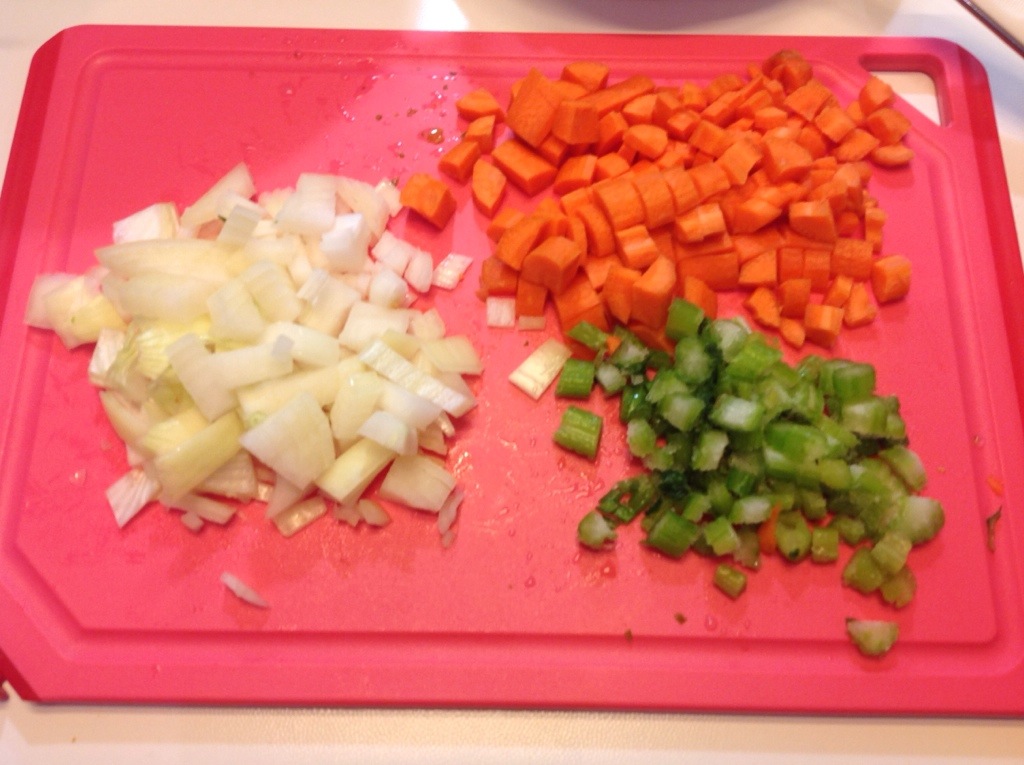
I put everything in a pan and add the two stock cubes.

I add 2 litres water, cover and cook for about half an hour.

Once the vegetables are cooked, I blend with a hand blender. It should be fairly runny.

I add parsley, adjust the salt, cover and rest.

I prepare the pasta.
Italian '00' flour, maize flour and hot water.
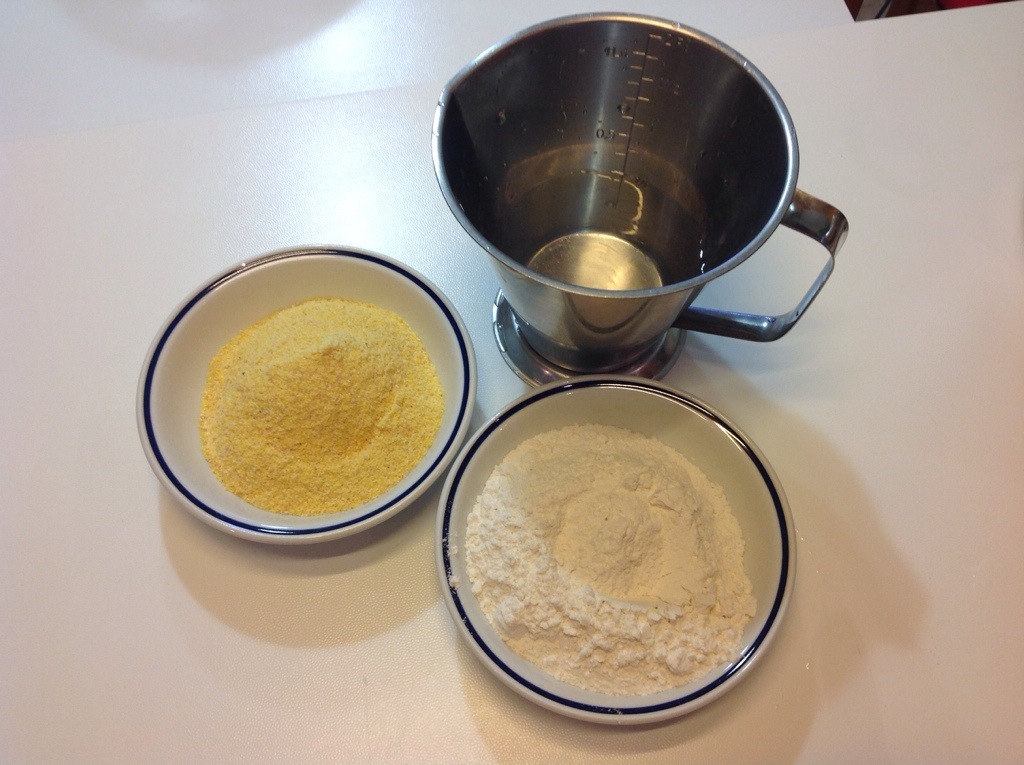
I combine the two flours on the work surface.

I mix them thoroughly.

I add the hot water a little at a time.

I knead to a uniform, firm dough, form a ball, wrap in cling film and rest for half an hour.

After resting, I flour the work surface and place the dough on it.

I roll it out, flouring above and below.

I widen and turn it, rolling to about 3 mm thick. Ideally, let the sheet dry before cutting it into little squares.

I generously flour and roll up the sheet.
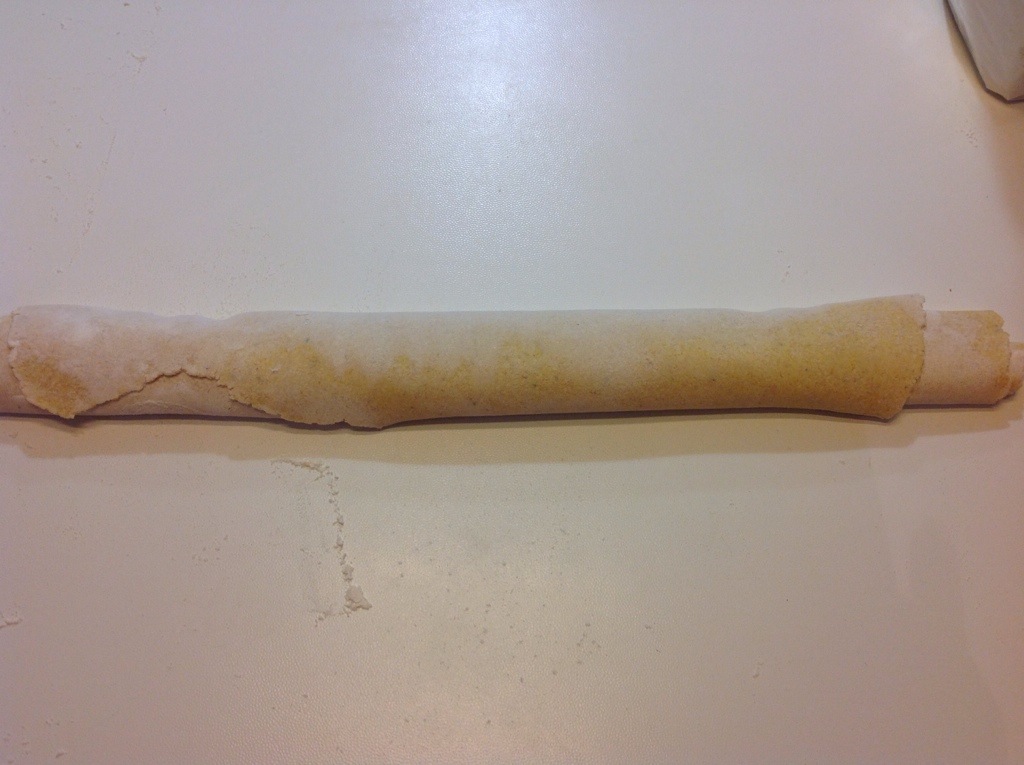
I slice it as for tagliatelle.
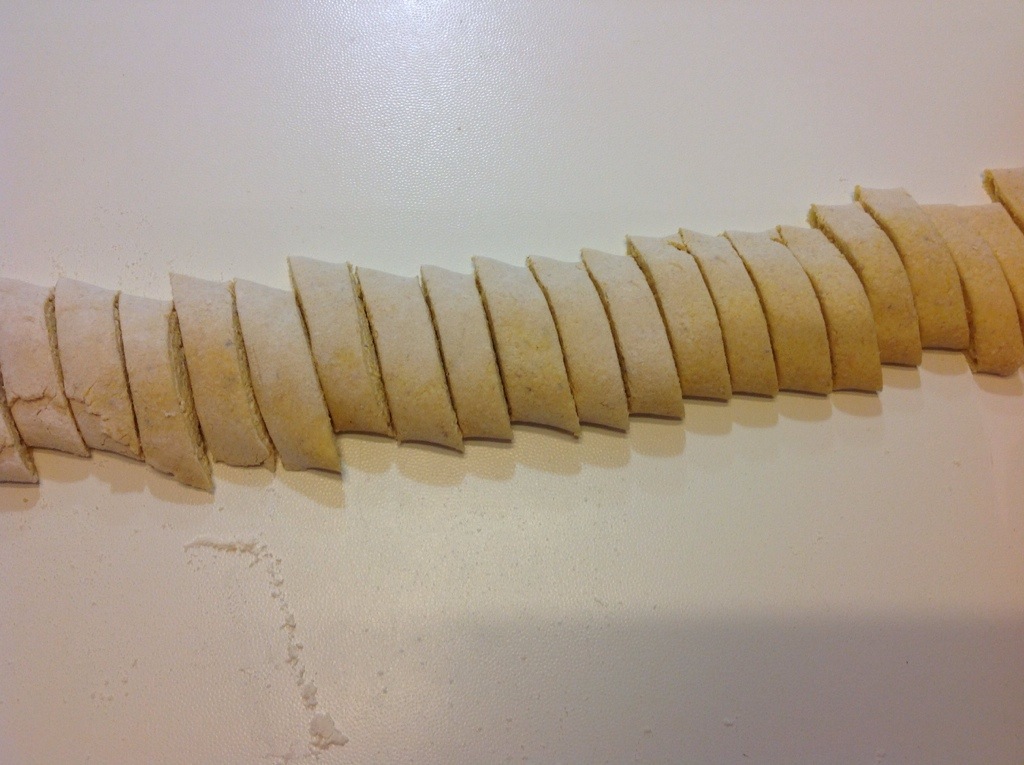
Then into small diamonds.

I separate and flour them, arrange on a tray and dry for about an hour, turning them.

I boil the broth, add the pasta and cook about 15 minutes, stirring continuously as it should be thick and tends to stick. Add vegetable stock if too thick.
I turn off, cover and rest for up to 1 hour.
Before serving, adjust salt and decide how thick you want it.
I serve with Parmigiano, freshly ground pepper and a drizzle of oil.

My guests loved this soup. The texture and flavour of the pasta are distinctive; it should be very thick and creamy.
Original source: https://incucinaconlilly.com/2014/02/28/pasta-e-fagioli-o-giugetti-romagnoli/
Reserved advertising space · no adverts are active