
Basic fresh pasta: tagliatelle
Published on 11 February 2014
Favourites stay in this browser only. Sign in to save them to your account.

Selections and your current step are saved in this browser for this recipe.
Ingredients and method
The preparation remains in its original order; guided mode is not available for this structure.
Ingredients for 4 people
400 g Italian '00' flour
4 medium whole eggs
The rule is 1 egg per 100 g Italian '00' flour. I made 3 portions here.
I do not salt the dough because it develops an unattractive colour as it dries; I salt only the cooking water.

I make a well in the flour on the work surface and add eggs.

I break them with a fork and gradually incorporate flour.

Once almost all the egg is absorbed, I knead by hand, incorporating all the flour.

I work vigorously, turning and stretching with my palm.


It becomes elastic and uniform. I continue until smooth, then form a ball.

I wrap in cling film and rest at least half an hour, essential for rolling well.

I cut the rested dough into small pieces.
I have clamped the hand-cranked pasta machine, affectionately called ‘nonna papera’, to the table. Skilled cooks with time can use a rolling pin. I also have an electric machine, but not everyone does.

I set the rollers widest, flour and flatten a piece and pass it through.

I put it on the surface, thoroughly floured.

I fold and pass through several times.

I process all the strips, then gradually narrow the rollers, keeping the sheets well floured.


Halve overly long sheets. Choose your thickness; I used the third-last setting.

I move the handle to the tagliatelle cutter, cut all sheets and flour thoroughly.

I arrange on a floured towel on a tray without piling up, turning occasionally.
I boil a large pan of salted water and add pasta. It takes very little time: once floating and the water returns to the boil, drain and dress.

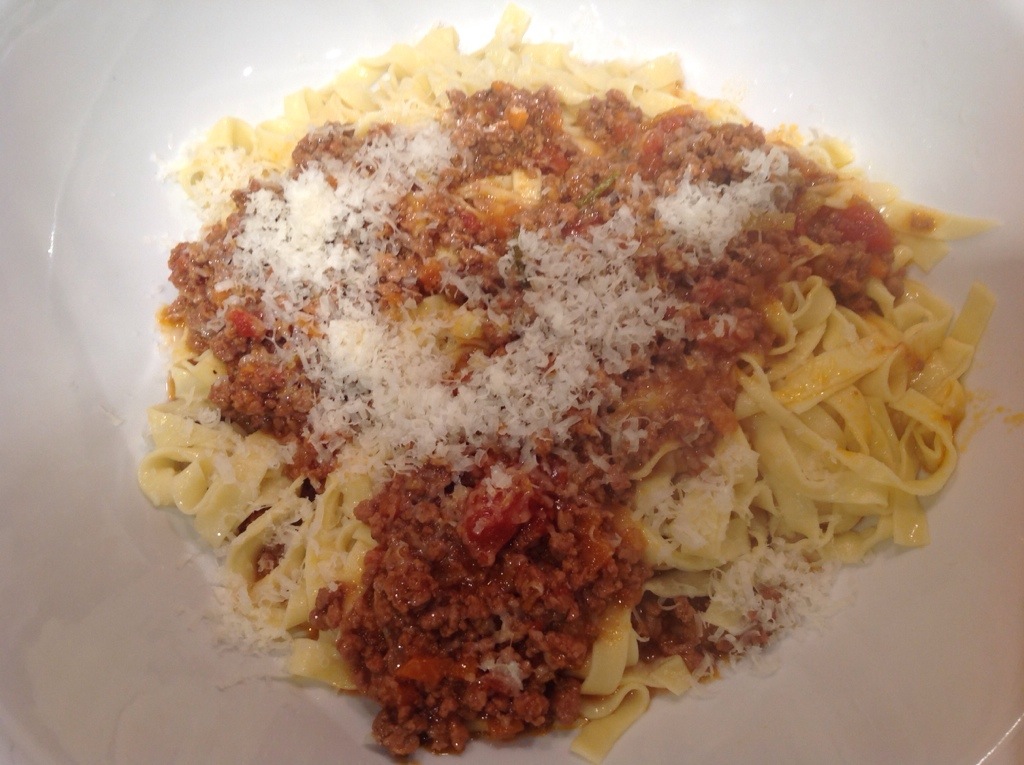
I dressed them with meat ragù; see basic recipes on the blog. I use the same dough for lasagne, and the basic béchamel recipe is there too.

400 g Italian '00' flour
4 medium whole eggs
The rule is 1 egg per 100 g Italian '00' flour. I made 3 portions here.
I do not salt the dough because it develops an unattractive colour as it dries; I salt only the cooking water.

I make a well in the flour on the work surface and add eggs.

I break them with a fork and gradually incorporate flour.
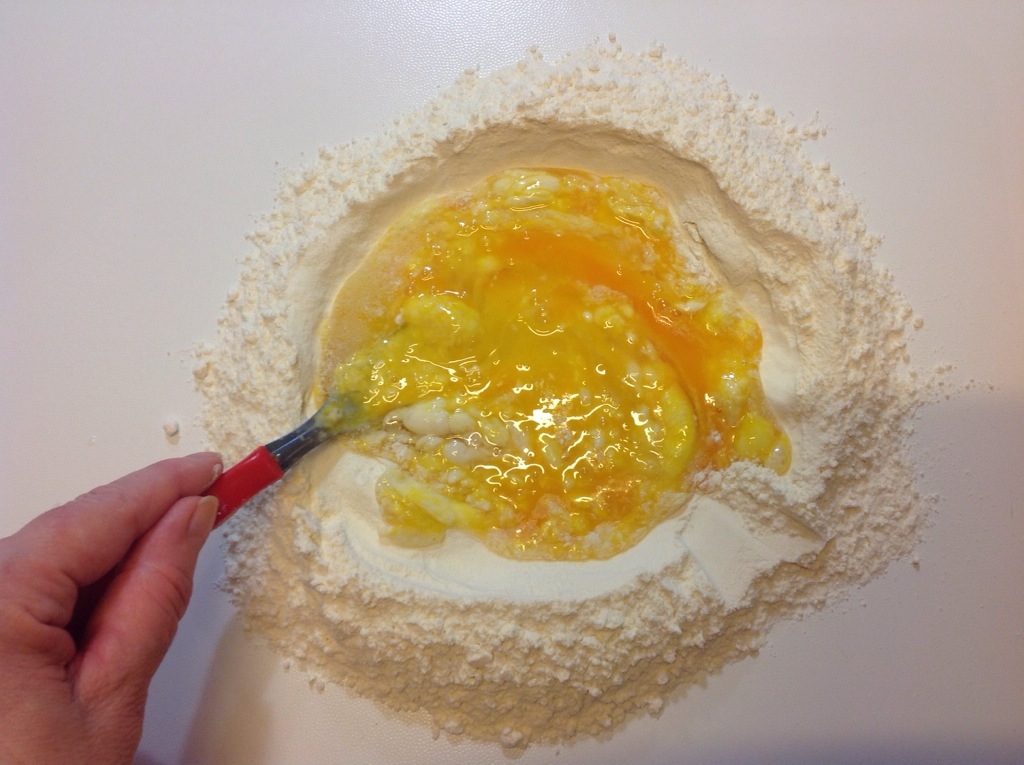
Once almost all the egg is absorbed, I knead by hand, incorporating all the flour.

I work vigorously, turning and stretching with my palm.
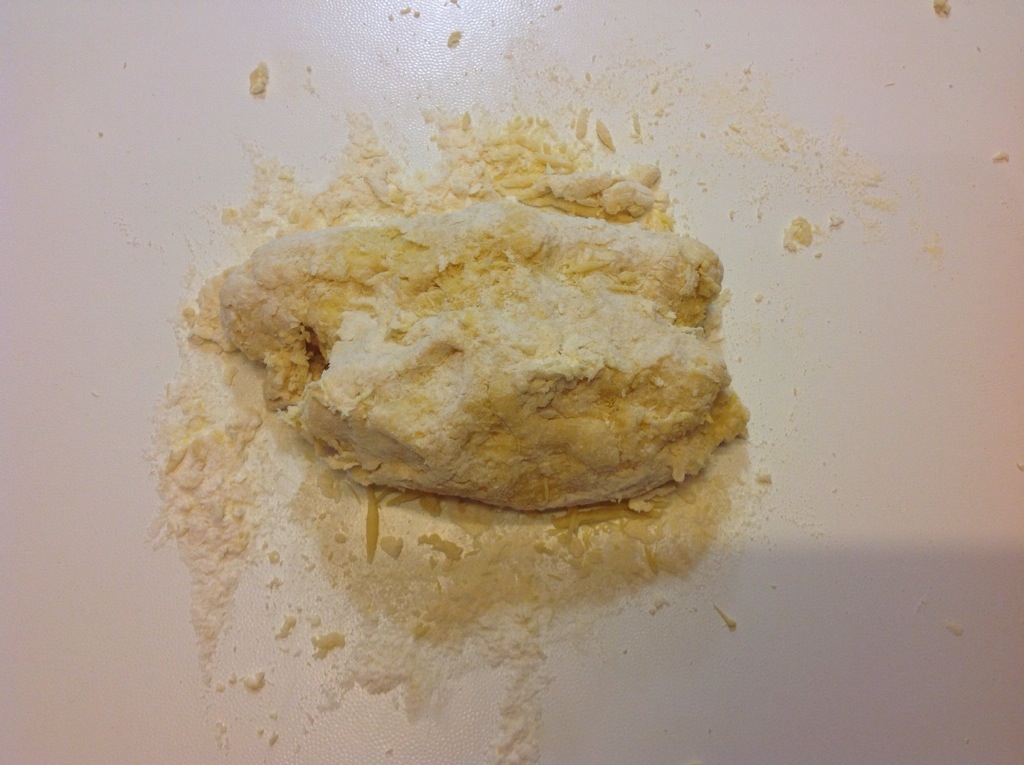

It becomes elastic and uniform. I continue until smooth, then form a ball.

I wrap in cling film and rest at least half an hour, essential for rolling well.
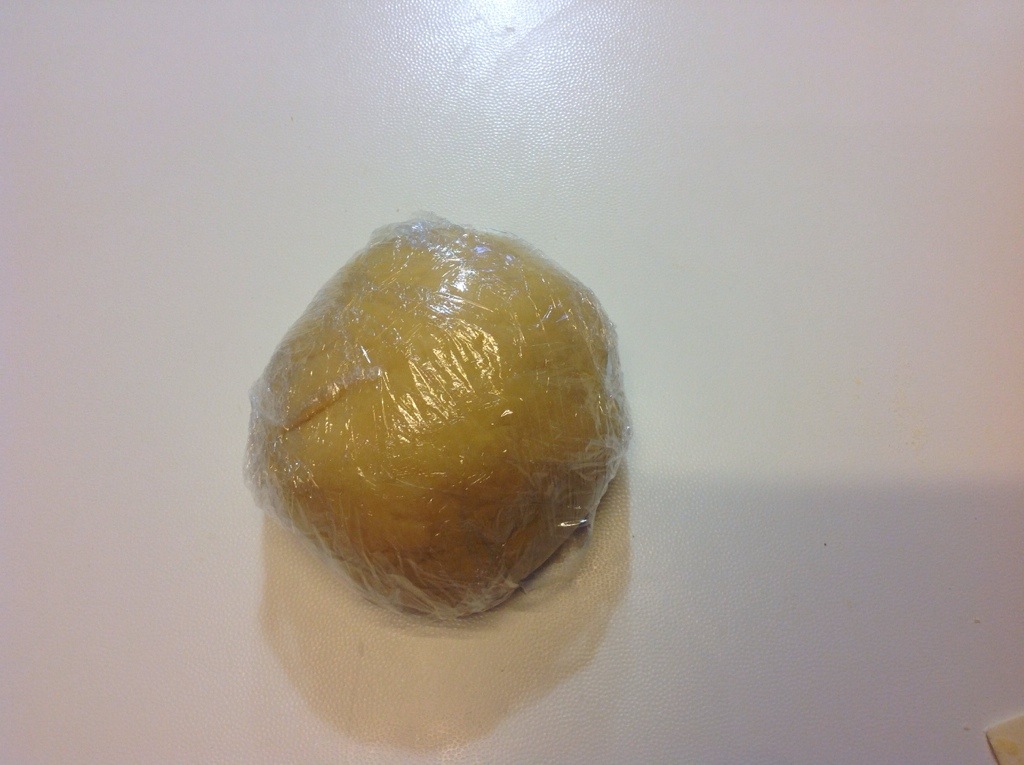
I cut the rested dough into small pieces.
I have clamped the hand-cranked pasta machine, affectionately called ‘nonna papera’, to the table. Skilled cooks with time can use a rolling pin. I also have an electric machine, but not everyone does.

I set the rollers widest, flour and flatten a piece and pass it through.

I put it on the surface, thoroughly floured.

I fold and pass through several times.

I process all the strips, then gradually narrow the rollers, keeping the sheets well floured.


Halve overly long sheets. Choose your thickness; I used the third-last setting.
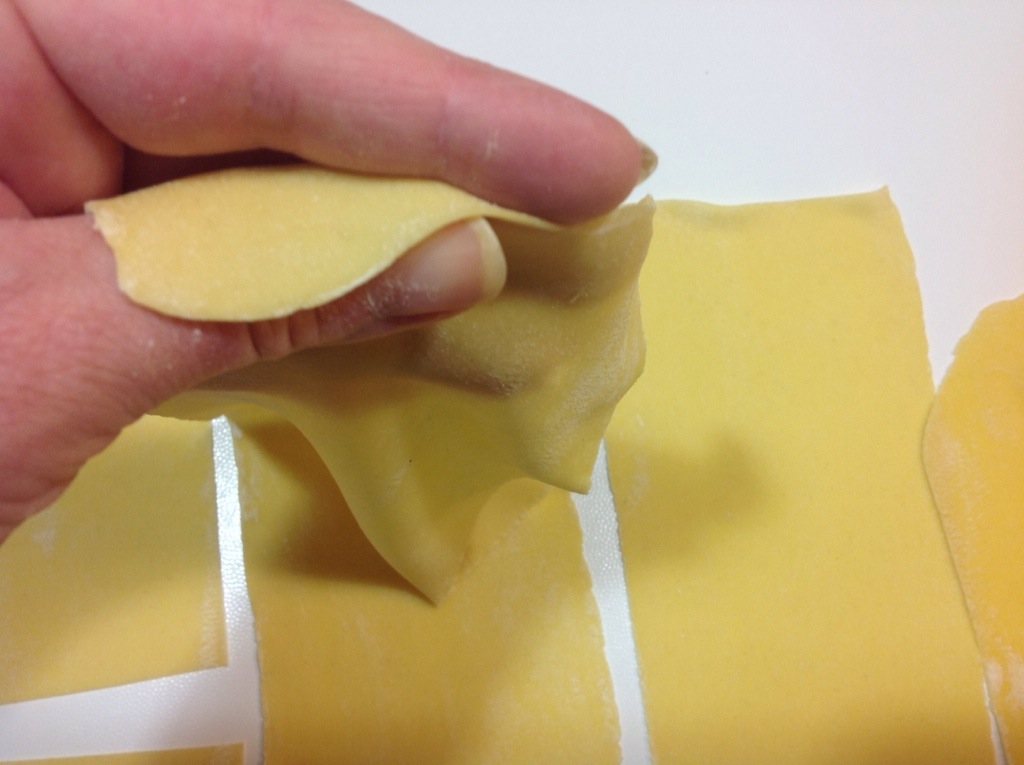
I move the handle to the tagliatelle cutter, cut all sheets and flour thoroughly.

I arrange on a floured towel on a tray without piling up, turning occasionally.
I boil a large pan of salted water and add pasta. It takes very little time: once floating and the water returns to the boil, drain and dress.

I dressed them with meat ragù; see basic recipes on the blog. I use the same dough for lasagne, and the basic béchamel recipe is there too.
Original source: https://incucinaconlilly.com/2014/02/11/la-pasta-fresca-base-le-tagliatelle/
Reserved advertising space · no adverts are active