
No-knead olive bread
Published on 15 January 2014
Favourites stay in this browser only. Sign in to save them to your account.
Selections and your current step are saved in this browser for this recipe.
Ingredients and method
The preparation remains in its original order; guided mode is not available for this structure.
Ingredients
350 g water at 15°C, cold tap water
400 g Italian '0' flour
200 g chopped Taggiasca olives
9 g fresh yeast or 3 g dried yeast from a sachet
Thank you to VivaLa Focaccia for this no-knead recipe: no kneading by hand or mixer.
Simply mix the ingredients for a few minutes. Jim Lahey’s revolutionary approach combines very little yeast, high hydration and a long rise.
I recommend preparing the dough in the evening and continuing the next day.
You need a covered baking container at least 25 cm across and 14 high, able to withstand 250°C.
Cast iron is recommended; I tried Pyrex with excellent results.

I dissolve the yeast in the water in a large bowl.

I add all the flour and chopped olives. The recipe adds no salt, but I think a teaspoon works well, depending on how salty the olives are.

I oil a large bowl lightly to make removing the dough easier later.

I mix for about 1 minute until the flour is absorbed, producing an uneven, sticky dough, then transfer to the oiled bowl.

I cover very thoroughly with cling film and leave untouched in a corner of the house for 12 to 18 hours, until doubled in volume.
Here is mine after 14 hours.

I generously flour the work surface and gently turn out the dough without working it. It will be fairly loose.

I oil my hands, or use a spatula, and fold the dough into thirds.


I turn it and fold in half.

I repeat these folds once more, first into thirds, then halves.
I shape a ball and place on a tea towel generously dusted with white flour and maize flour, the type used for polenta.

I cover loosely and leave to rise for 1 hour in very warm surroundings, otherwise 2 hours.

Half an hour before baking, I heat the conventional oven to 250°C with the baking container inside.
After 2 hours, the dough has doubled.

I carefully remove the extremely hot container. Placing my hands beneath the towel, I gently but decisively tip the dough into it.

I cover immediately.

I bake for 30 minutes. You will see the bread gradually rise.


After half an hour, I open the oven and very carefully remove the lid, rotate the container and bake another 15 or 20 minutes, judging whether it is well browned.

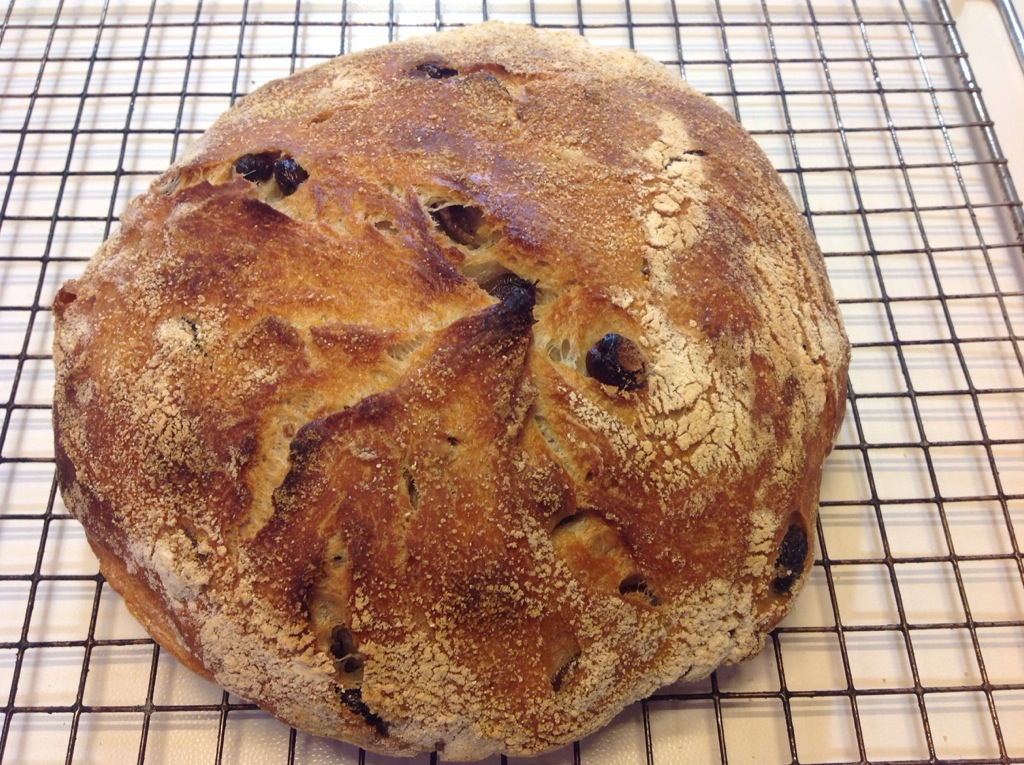
The bread is ready. I immediately remove it from the oven and container and cool completely on a rack, then slice with a serrated knife. The crust should be very crisp and the crumb soft.
The greatest satisfaction is watching bread grow in the oven: you realise it is alive.

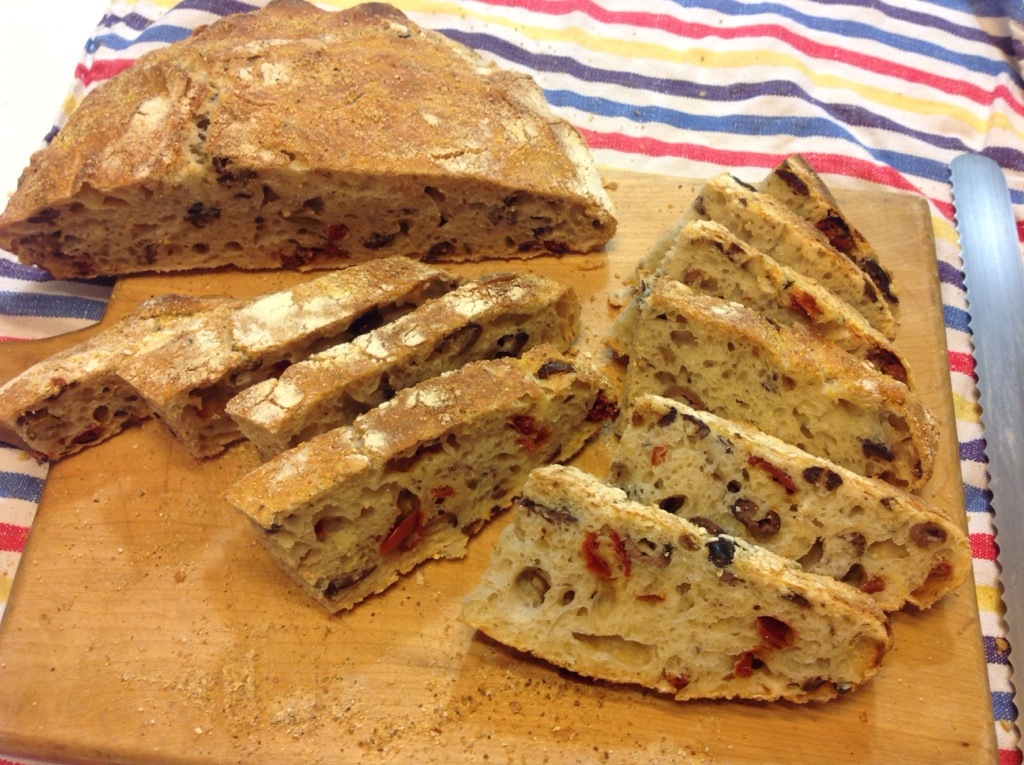
I also made a loaf replacing 50 g olives with 50 g dried tomatoes. Delicious too.

350 g water at 15°C, cold tap water
400 g Italian '0' flour
200 g chopped Taggiasca olives
9 g fresh yeast or 3 g dried yeast from a sachet
Thank you to VivaLa Focaccia for this no-knead recipe: no kneading by hand or mixer.
Simply mix the ingredients for a few minutes. Jim Lahey’s revolutionary approach combines very little yeast, high hydration and a long rise.
I recommend preparing the dough in the evening and continuing the next day.
You need a covered baking container at least 25 cm across and 14 high, able to withstand 250°C.
Cast iron is recommended; I tried Pyrex with excellent results.
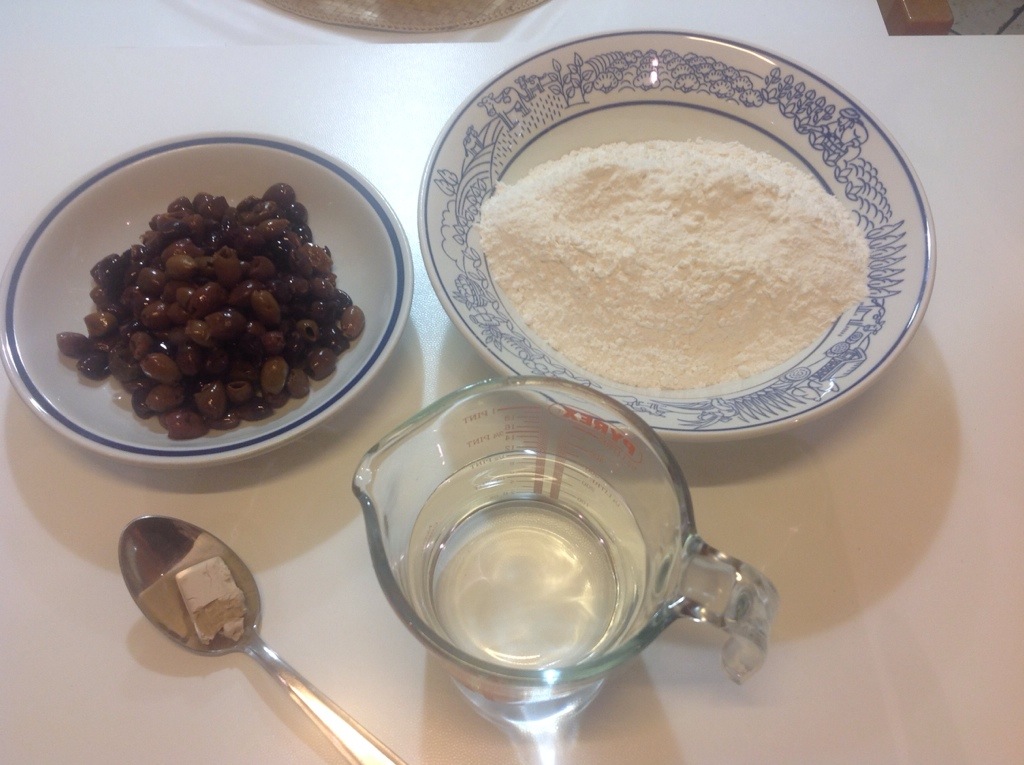
I dissolve the yeast in the water in a large bowl.

I add all the flour and chopped olives. The recipe adds no salt, but I think a teaspoon works well, depending on how salty the olives are.

I oil a large bowl lightly to make removing the dough easier later.

I mix for about 1 minute until the flour is absorbed, producing an uneven, sticky dough, then transfer to the oiled bowl.

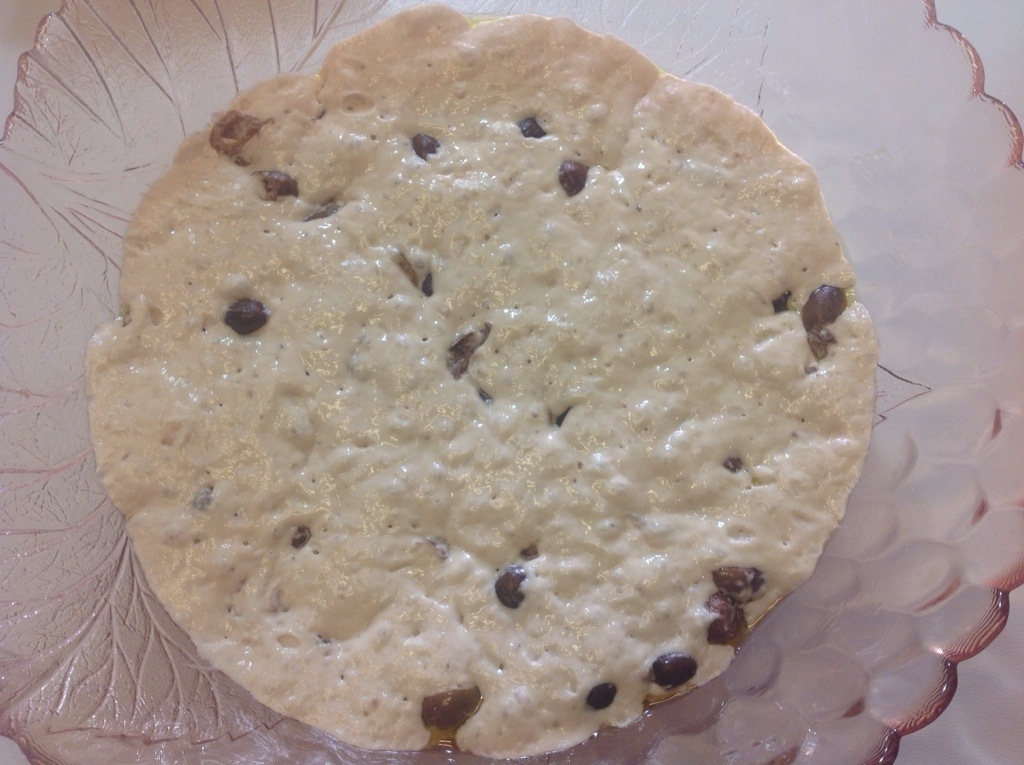
I cover very thoroughly with cling film and leave untouched in a corner of the house for 12 to 18 hours, until doubled in volume.
Here is mine after 14 hours.
I generously flour the work surface and gently turn out the dough without working it. It will be fairly loose.

I oil my hands, or use a spatula, and fold the dough into thirds.


I turn it and fold in half.

I repeat these folds once more, first into thirds, then halves.
I shape a ball and place on a tea towel generously dusted with white flour and maize flour, the type used for polenta.
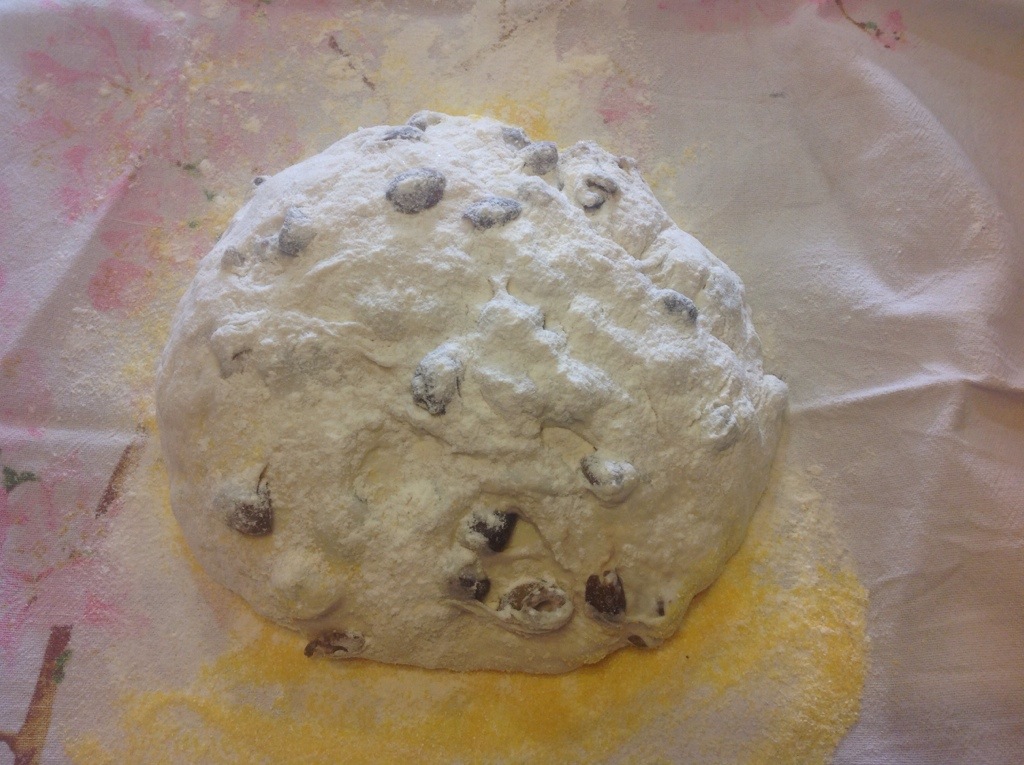
I cover loosely and leave to rise for 1 hour in very warm surroundings, otherwise 2 hours.
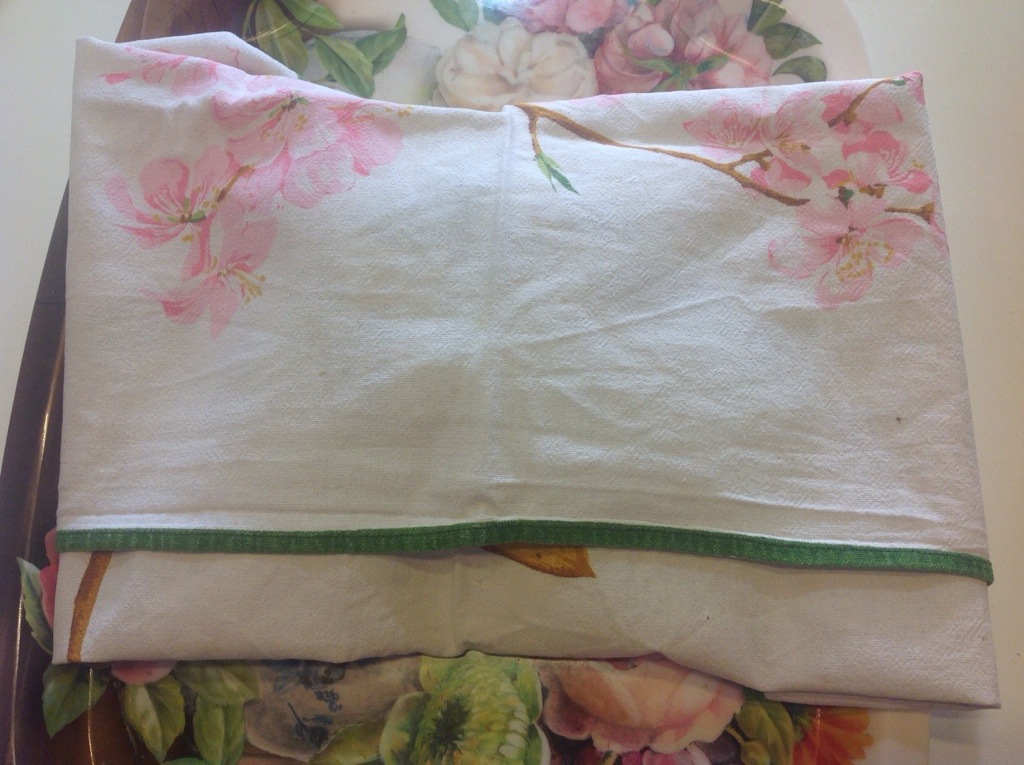
Half an hour before baking, I heat the conventional oven to 250°C with the baking container inside.
After 2 hours, the dough has doubled.
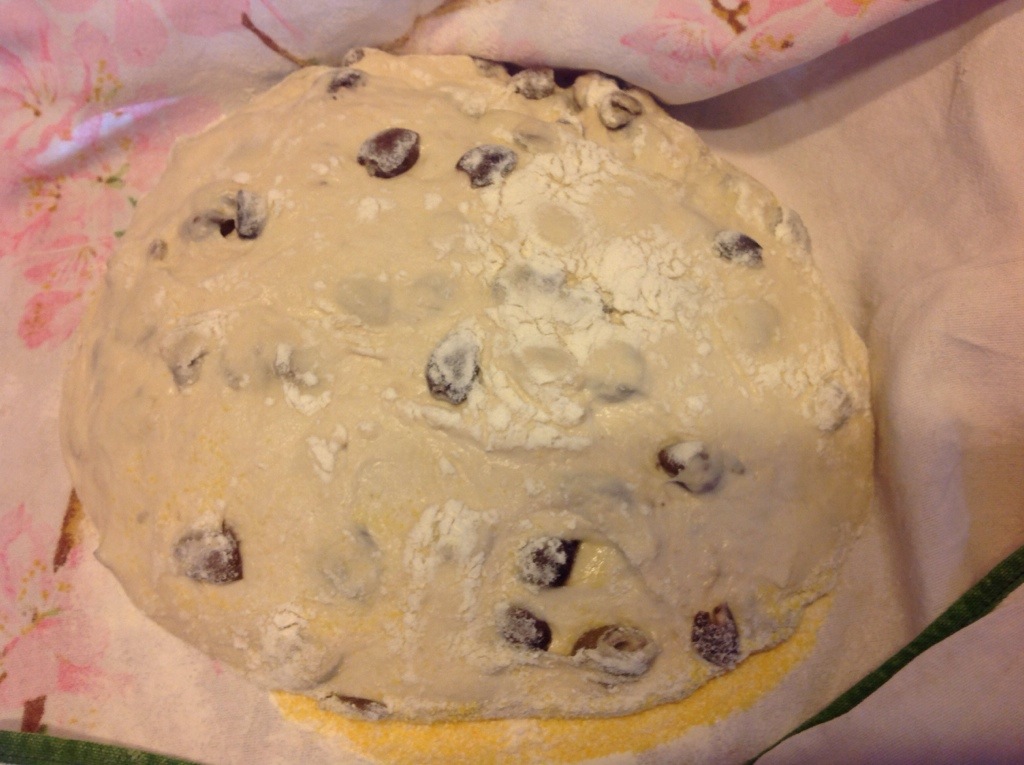
I carefully remove the extremely hot container. Placing my hands beneath the towel, I gently but decisively tip the dough into it.
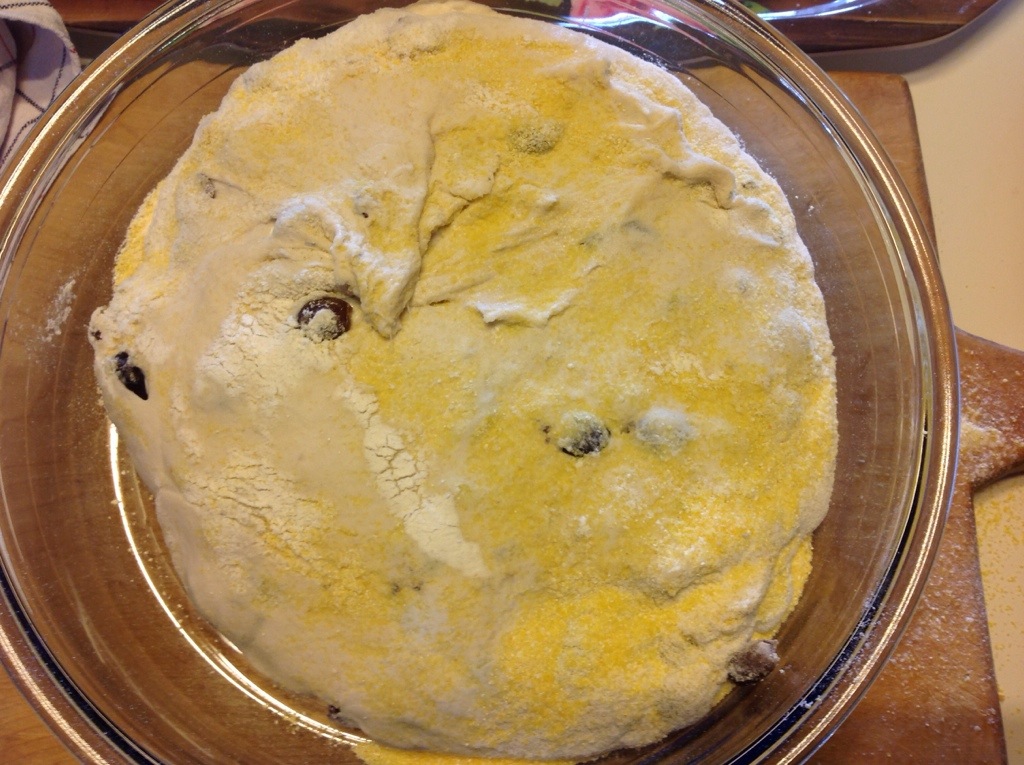
I cover immediately.

I bake for 30 minutes. You will see the bread gradually rise.

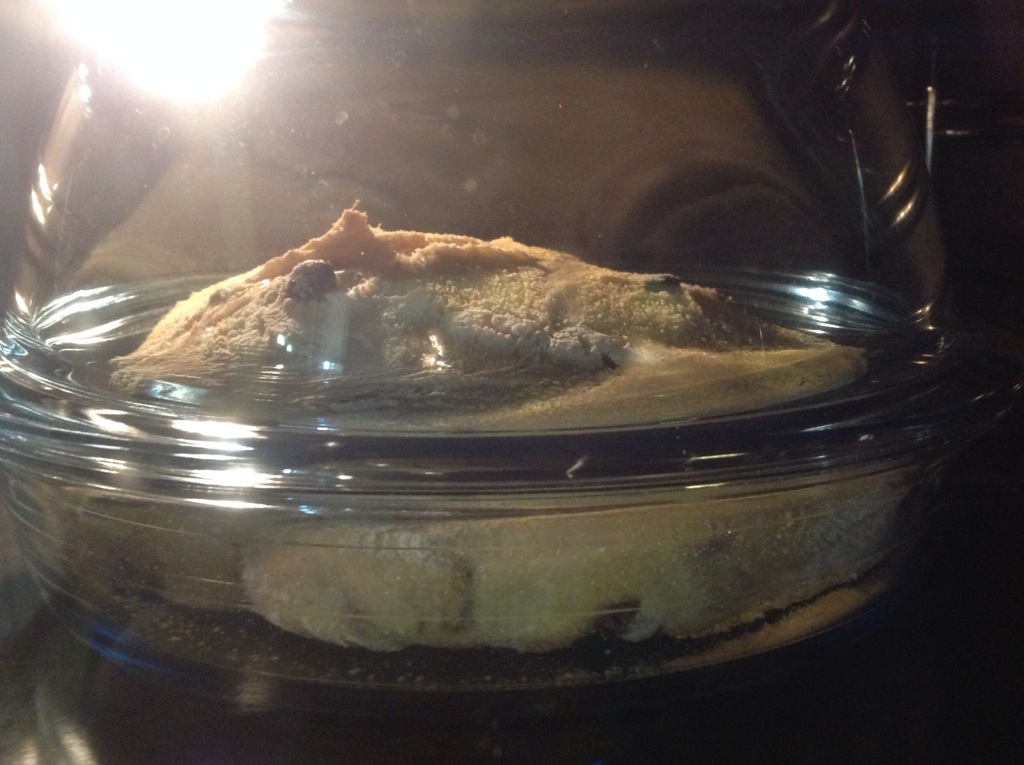
After half an hour, I open the oven and very carefully remove the lid, rotate the container and bake another 15 or 20 minutes, judging whether it is well browned.

The bread is ready. I immediately remove it from the oven and container and cool completely on a rack, then slice with a serrated knife. The crust should be very crisp and the crumb soft.
The greatest satisfaction is watching bread grow in the oven: you realise it is alive.
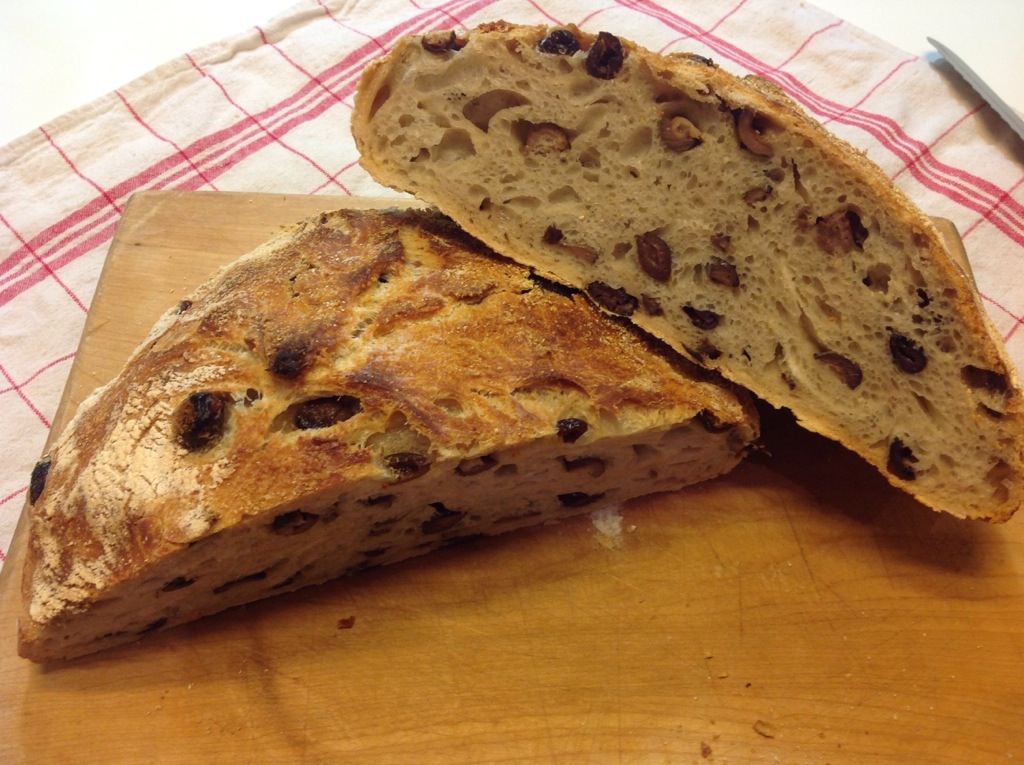
I also made a loaf replacing 50 g olives with 50 g dried tomatoes. Delicious too.
Original source: https://incucinaconlilly.com/2014/01/15/pane-alle-olive/
Reserved advertising space · no adverts are active